
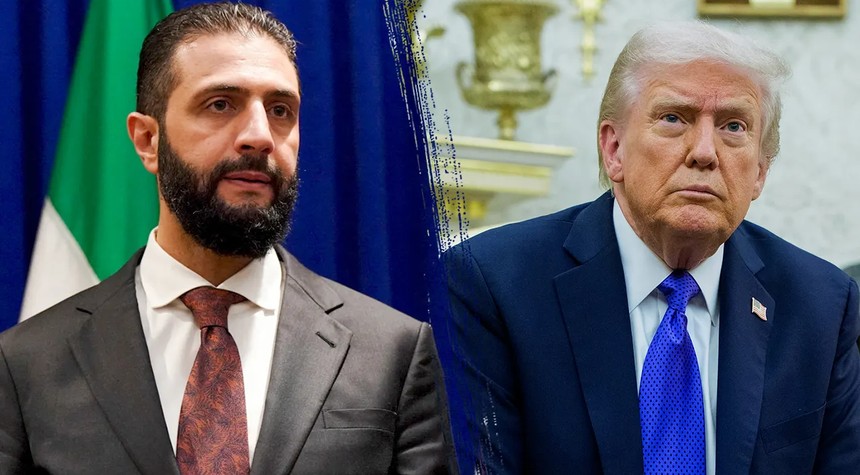
Syrian interim President Ahmed al-Sharaa will travel to Washington next week for what marks the first official visit by a Syrian president to the American capital, a significant diplomatic development in the evolving relationship between the two nations.
A White House official has confirmed the meeting is scheduled for November 10th, representing a remarkable turn in U.S.-Syria relations that would have seemed improbable mere months ago.
President Trump and al-Sharaa first met in May during the president’s visit to Saudi Arabia, where Trump characterized the Syrian leader in notably positive terms. “Young, attractive guy, tough guy,” the president told reporters aboard Air Force One. “Strong past, very strong past—fighter. He’s got a real shot at holding it together.”
The characterization carries weight given al-Sharaa’s background. The Syrian leader, formerly known by his nom de guerre Abu Mohammad al-Jolani, led the rebel offensive last December that ultimately toppled the regime of Bashar al-Assad, ending decades of authoritarian rule. His organization, Hay’at Tahrir al-Sham, had been designated by the State Department as a Foreign Terrorist Organization, a label that complicated diplomatic engagement.
That designation was lifted in June when Secretary of State Marco Rubio announced the Trump administration’s decision to remove the terrorist organization label as part of broader efforts to reset American-Syrian relations. “This FTO revocation is an important step in fulfilling President Trump’s vision of a stable, unified, and peaceful Syria,” Rubio stated.
The diplomatic rapprochement has moved swiftly. During his visit to Riyadh, President Trump received a standing ovation after announcing his administration would pursue the cessation of sanctions against Syria. “Give them a chance at greatness,” Trump declared, later joking about his decision: “Oh, what I do for the crown prince,” a reference to Saudi Arabia’s de facto leader, Mohammed bin Salman, who has advocated for engagement with Syria’s new leadership.
The path forward faces practical obstacles. Efforts to lift the Caesar sanctions, which represent the most stringent economic restrictions on Syria, have encountered procedural delays in Congress. These sanctions, named for a Syrian military photographer who documented atrocities under the Assad regime, have remained a cornerstone of American policy toward Syria for years.
The upcoming visit represents a calculated gamble by the Trump administration. Al-Sharaa’s transformation from insurgent leader to potential partner reflects the complex realities of Middle Eastern politics, where yesterday’s adversaries can become today’s necessary allies in pursuit of regional stability.
The meeting will test whether the Trump administration’s approach of direct engagement with unconventional leaders can yield results in one of the world’s most volatile regions. Syria’s future stability matters not only for its own citizens but for the broader Middle East, given the nation’s strategic position and its role in regional conflicts over the past decade.
For now, the administration appears committed to this diplomatic course, betting that engagement offers better prospects for American interests than continued isolation.
Related: Treasury Department Sanctions Cancun-Based International Smuggling Network