
The United States Navy’s nuclear-powered aircraft carrier USS Gerald R. Ford revealed its position Wednesday afternoon approximately 175 miles off Morocco’s western coast, placing the 1,000-foot warship on a direct course through the Strait of Gibraltar toward the Mediterranean Sea. The vessel’s activation of its tracking system was no accident. It was a deliberate signal to the world, and particularly to Tehran, that American military power is moving into position.
The Ford represents the second aircraft carrier President Trump has ordered toward waters near Iran as part of an expanding military deployment designed to pressure the Islamic Republic into negotiations over its nuclear program. What the President has termed a naval “armada” is accompanied by a substantial and largely underreported surge of American air power into Europe and the Middle East.
Senior national security officials have informed President Trump that the United States military stands ready to conduct strikes against Iranian targets as early as Saturday, though sources familiar with the discussions indicate any military action would likely extend beyond the immediate weekend. The President has not yet authorized strikes, according to officials speaking on condition of anonymity due to the sensitive nature of ongoing deliberations.
The Ford’s decision to activate its Automatic Identification System and broadcast its location on open-source maritime tracking platforms represented a calculated move in what has become a very public demonstration of American military capability. The message was intended not merely for defense analysts and maritime enthusiasts monitoring naval movements, but for decision-makers in Tehran.
While the naval buildup has captured headlines, an equally significant movement of American air power has proceeded with less fanfare but equal visibility to those tracking military aircraft. Over an eight-hour period Wednesday, more than fifty United States Air Force and Navy aircraft were identified flying eastward from military installations on both American coasts. These aircraft proceeded to the United Kingdom, continental Europe, and onward to the Middle East, where several disappeared from civilian radar systems near the Jordan-Saudi Arabia border.
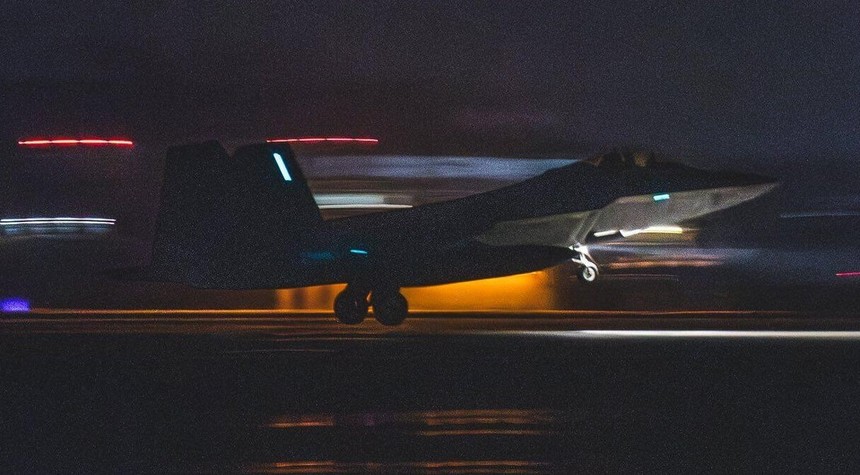
The aircraft observed in transit consisted primarily of refueling tankers, transport planes, and surveillance aircraft. However, photographs captured by civilian aviation enthusiasts and shared through public channels have documented American F-15, F-22, and F-35 fighter jets landing at British airbases and departing again this week. These images confirm that beyond the logistics aircraft visible through tracking data, American strike capabilities have also been repositioning into the theater.
The flights documented Wednesday represent merely a fraction of hundreds of aircraft movements observed in recent days. While routine repositioning of military assets occurs continuously across the globe, the concentration of refueling aircraft and their arrival at forward bases in the Azores and Crete ahead of the Ford’s approach has fueled informed speculation about potential American military action against Iran.
The bases in the Portuguese Azores, situated in the mid-Atlantic, along with facilities on Crete, provide crucial staging areas for extended air operations. Their activation suggests preparation for sustained military operations should the President order them.
And that is the way it is. The pieces are moving into position on the strategic chessboard. Whether they will be used remains the President’s decision to make.
Related: United States Sends 100 Troops to Nigeria Amid Growing Islamist Threat