
Australia has secured preliminary assurances from its major Asian trading partners that fuel supplies will continue flowing despite the escalating conflict with Iran and the resulting disruption to global oil markets.
The federal government has been conducting urgent diplomatic outreach to Singapore, South Korea, Malaysia, and Japan as the war with Iran and the closure of the Strait of Hormuz threatens to create severe shortages of petrol and diesel across the globe.
Assistant Foreign Minister Matt Thistlethwaite reported that ministerial-level meetings held during the past week with Japanese and South Korean officials yielded commitments that normal supply levels would be maintained. These assurances carry significant weight for a nation that imports approximately ninety percent of its refined fuel products.
Prime Minister Anthony Albanese has already formalized a joint statement with Singapore addressing bilateral energy trade. This relationship proves particularly critical, as Singapore provides fifty-five percent of Australia’s petrol imports and fifteen percent of its diesel supply. Government sources indicate that Albanese may travel to Singapore following the Easter break to further solidify these arrangements, though the Prime Minister’s office has not confirmed specific travel plans.
Energy Minister Chris Bowen announced that suppliers have begun diversifying their sources, now drawing refined fuel from the United States and Mexico in addition to traditional Asian refineries. This strategic pivot addresses a fundamental vulnerability in Australia’s energy security framework.
The government’s negotiating position benefits considerably from Australia’s status as a major liquefied natural gas exporter. Japan and South Korea rank among the world’s largest LNG consumers, and Australia has employed this economic leverage effectively in recent fuel supply discussions.
This diplomatic reality may force the government to reconsider plans for a windfall profits tax on gas companies. Treasury officials had been modeling such a tax ahead of the May twelfth budget, but both Japan and South Korea have consistently opposed Australian policies they believe could disrupt LNG exports. The timing of a new tax during these delicate negotiations presents obvious complications.
Japanese Prime Minister Sanae Takaichi is expected to visit Australia in the coming weeks to discuss rare earth minerals and coordinated efforts to reopen the Strait of Hormuz, according to reports from Nikkei Asia.
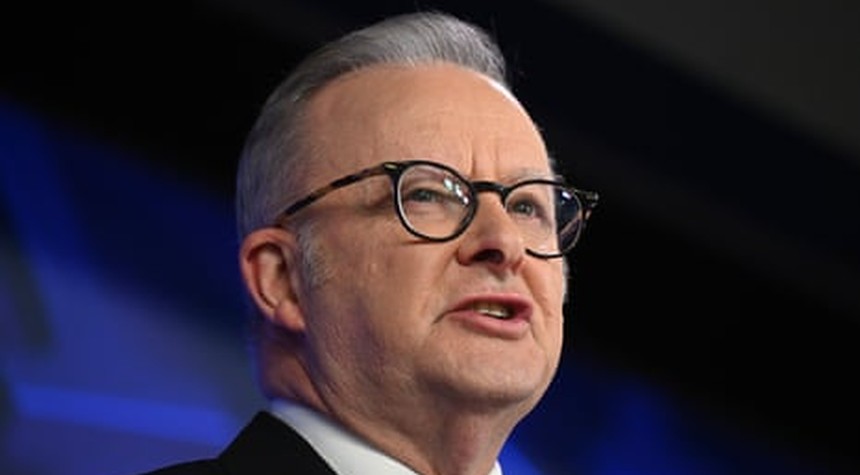
Speaking at the National Press Club, Prime Minister Albanese made clear that maintaining Australia’s reputation as a reliable gas supplier takes precedence over revenue considerations. He characterized the arrangement as a straightforward exchange, noting that Australia’s ability to secure fuel imports depends directly on honoring its export commitments to Asian partners.
The government’s approach reflects a pragmatic assessment of Australia’s strategic position. With minimal domestic refining capacity and heavy dependence on imported fuel, the nation faces genuine vulnerability should trading partners prioritize their own domestic needs during a global supply crisis.
The closure of the Strait of Hormuz, through which roughly one-fifth of global oil supplies typically pass, has sent shockwaves through international energy markets. Australia’s geographic distance from the conflict zone provides no insulation from these economic consequences.
Labor supported a parliamentary motion to establish an inquiry examining fuel security, acknowledging the broader implications of the current crisis for national preparedness and long-term energy policy.
Related: President Sets Tuesday Deadline for Iran to Reopen Strait of Hormuz