
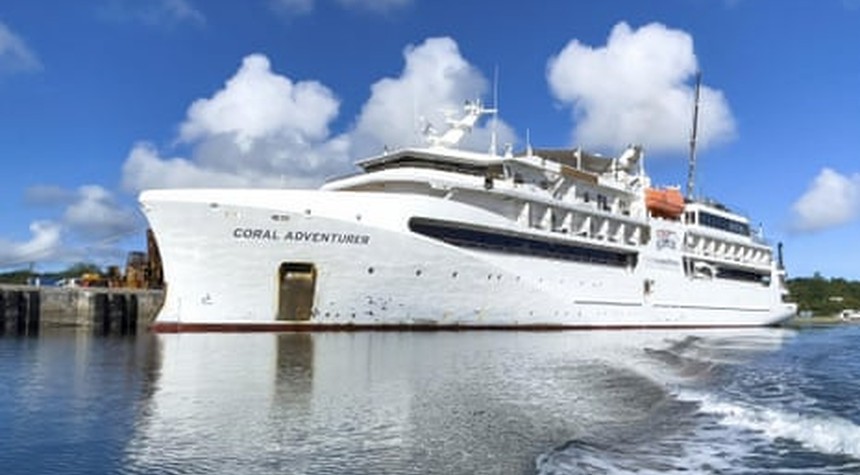
The Australian cruise vessel Coral Adventurer was successfully refloated Tuesday afternoon after spending three days stranded on a coral reef off the coast of Papua New Guinea, bringing to a close what has become the second troubling incident for the ship’s operator in as many months.
The vessel, carrying 80 passengers and 44 crew members, ran aground approximately 30 kilometers from Lae, Papua New Guinea’s second-largest city, on Saturday morning at 6:57 local time. The ship settled onto the coral reef with a six-degree list to the port side. No injuries were reported among those aboard.
After initial efforts to free the vessel proved unsuccessful, Coral Expeditions dispatched a tugboat to the scene on Sunday. The ship was finally pulled free on Tuesday afternoon and now sits anchored nearby awaiting comprehensive inspections of both the hull and the surrounding marine environment. Preliminary assessments indicate no damage to the vessel, though thorough examinations remain standard procedure following such incidents.
The company has made the prudent decision to cancel the voyage entirely, acknowledging its failure to deliver the experience passengers had anticipated. All passengers are being flown home on a charter flight to Cairns, the Australian port from which they departed on December 18th. The decision reflects both the practical impossibility of continuing the journey and the company’s recognition that the trust essential to the cruise experience has been compromised.
What makes this incident particularly noteworthy is that the Coral Adventurer was on its first voyage since becoming the subject of an unrelated investigation into far more serious circumstances. In October, 80-year-old Sydney resident Suzanne Rees died after allegedly being left behind on Lizard Island during an excursion. The crew reportedly did not realize she was missing until she failed to appear for dinner that evening. Her body was discovered the following day after extensive land and sea searches were conducted. That voyage was also terminated early, with passengers flown home from the Torres Strait islands.
The October incident raises fundamental questions about passenger accountability procedures aboard cruise vessels. How a passenger can be left behind on an island excursion speaks to potential systemic failures in headcount protocols and crew oversight. The investigation into that matter continues.
Papua New Guinea’s National Maritime Safety Authority is working with Coral Expeditions to determine the circumstances that led to Saturday’s grounding. While coral reefs pose known navigational hazards in these waters, modern vessels are equipped with sophisticated navigation systems designed to prevent such incidents.
The company now faces the dual challenge of cooperating with authorities on two separate investigations while working to restore confidence among potential passengers. The cruise industry depends heavily on reputation and perceived safety. Two significant incidents in quick succession, one involving a fatality, present substantial obstacles to maintaining that confidence.
For now, the immediate concern involves completing inspections of the Coral Adventurer and assessing any environmental impact to the reef system. The vessel remains anchored and under observation as authorities and company officials work through standard post-incident procedures.
The passengers, meanwhile, are heading home with an experience far different from the Pacific adventure they anticipated when they boarded in Cairns just days ago.
Related: Interoceanic Train Carrying 250 Passengers Derails in Southern Mexico