
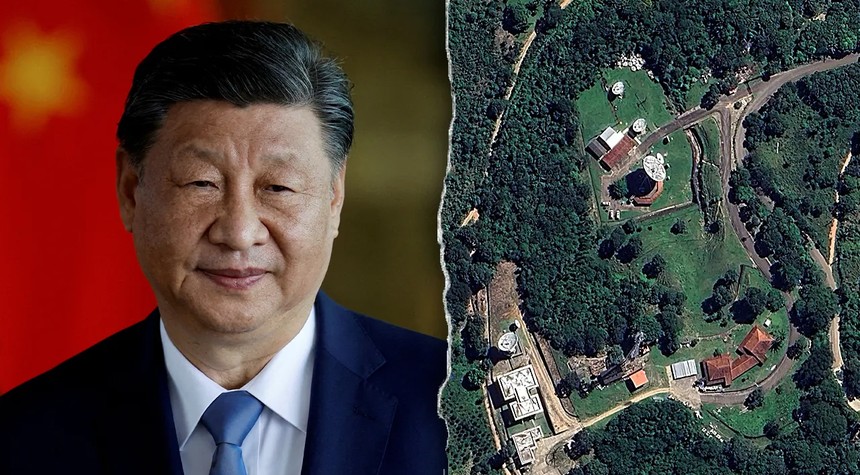
A comprehensive investigation by the House Select Committee on the Chinese Communist Party has documented what members describe as an expanding network of space facilities across Latin America that may serve dual military and civilian purposes, raising significant concerns about Beijing’s surveillance capabilities in America’s backyard.
The committee’s report identifies at least eleven ground stations, radio telescopes, and satellite ranging installations linked to the People’s Republic of China operating in Argentina, Venezuela, Bolivia, Chile, and Brazil. These facilities, according to the analysis, could enhance Beijing’s military intelligence gathering and warfighting capabilities throughout the Western Hemisphere.
The findings represent a troubling development in the ongoing strategic competition between Washington and Beijing. For decades, the United States has maintained predominant influence in Latin America under doctrines dating back to the Monroe presidency. The establishment of Chinese space infrastructure in the region marks a fundamental shift in hemispheric security dynamics.
Congressional investigators relied on open-source reporting, satellite imagery, and Chinese government planning documents to compile their assessment. These materials reveal that Beijing has elevated space cooperation to a central pillar of its diplomatic and economic engagement with Latin American nations.
The report emphasizes a critical challenge facing American policymakers: China’s military-civil fusion strategy deliberately blurs the distinction between academic research, commercial operations, and military applications. What appears as scientific cooperation or civilian telecommunications infrastructure may simultaneously serve intelligence collection and military purposes.
“Beijing uses space infrastructure in Latin America to collect adversary intelligence and strengthen the PLA’s future warfighting capabilities,” the committee stated in its findings, referring to China’s People’s Liberation Army.
Particularly concerning to lawmakers is the apparent lack of adequate oversight at certain installations. In at least one documented case, the host nation’s inspection rights appear significantly limited, raising questions about whether sovereign governments can verify that facilities ostensibly dedicated to civilian purposes are not being exploited for military or intelligence operations.
The report singles out a Chinese-operated deep space station in Argentina’s Neuquén province as among the most closely monitored sites. This facility operates under a fifty-year lease agreement, effectively granting Beijing long-term presence in South America with minimal transparency regarding its actual operations.
The committee has issued clear recommendations to the Trump administration: halt any further expansion of Chinese space infrastructure throughout Latin America and develop strategies to roll back existing installations that threaten American interests.
The situation presents complex diplomatic challenges. Latin American nations have sovereign rights to engage in international partnerships, and many have welcomed Chinese investment in technology and infrastructure. However, the dual-use nature of these space facilities creates security implications that extend beyond bilateral relationships.
As the United States confronts an increasingly assertive China on multiple fronts, the establishment of potential military surveillance capabilities in the Western Hemisphere represents a development that cannot be ignored. The question now is whether American diplomacy and strategic engagement can effectively counter Beijing’s expanding presence in a region long considered within the traditional sphere of United States influence.
Related: Mexican Navy Destroys Massive Drug Laboratory as Cartel Violence Escalates