
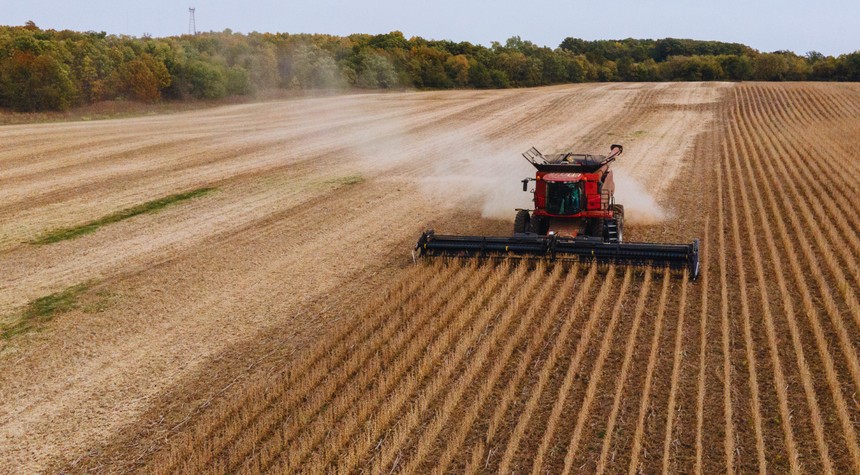
The American soybean farmer, long a quiet pillar of this nation’s agricultural economy, finds himself at the center of an international trade realignment that carries implications far beyond the fields of the Midwest.
Treasury Secretary Scott Bessent announced Thursday that China has agreed to purchase 12 million metric tons of American soybeans during the current season running through January. More significantly, Beijing has committed to buying 25 million tons annually for the next three years as part of a broader trade agreement reached following President Donald Trump’s meeting with Chinese leader Xi Jinping.
The announcement represents a turning point in what has been a difficult chapter for American agriculture. Farmers in southern Illinois report that drought conditions, rising operational costs, and China’s trade freeze have pushed soybean profits below break-even levels this season. What was once a reliable export market became a casualty of diplomatic friction between the world’s two largest economies.
The numbers tell a sobering story. According to the American Soybean Association, approximately 28 percent of U.S. soybean production was exported to China prior to the 2018 trade conflict. That figure plummeted to 11 percent in 2018 and 2019 when Beijing halted imports in retaliation for American tariffs on Chinese goods. While exports recovered to 31 percent by 2021 amid pandemic-era demand, they settled back to 22 percent in 2024.
During this period of disruption, China redirected its purchasing to suppliers in Brazil and Argentina, demonstrating how rapidly global trade flows can shift and exposing the vulnerability of American farmers to geopolitical tensions. The soybean, once an unremarkable export success story, became a weapon in the battle for global trade leverage.
Secretary Bessent emphasized the broader implications of the agreement, noting that several Southeast Asian nations have also committed to purchasing a combined 19 million tons of U.S. soybeans, though no specific timeframe was provided for those purchases.
“So our great soybean farmers, who the Chinese used as political pawns, that’s off the table, and they should prosper in the years to come,” Bessent stated.
However, some policy analysts suggest the situation is more complex than simple retaliation. Bryan Burack, a senior policy advisor for China and the Indo-Pacific at the Heritage Foundation, argues that China’s shift away from American soybeans was already in motion before recent trade tensions escalated.
“China was always going to reduce its reliance on the United States for food security,” Burack explained. “China started signing purchase agreements with other countries for soybeans well before President Trump took office.”
Burack contends that Beijing has pursued a long-term strategy of economic decoupling from the United States. “Unfortunately, the only way for us to respond is to do the same, and that process is painful and excruciating,” he noted.
For the American farmer caught in this geopolitical crossfire, the new agreement offers hope for stability. The soybean industry represents a $30 billion cornerstone of American agriculture, and its fortunes remain tied to diplomatic relationships that extend far beyond the farmgate.
The question now is whether this agreement represents a genuine thaw in trade relations or merely a temporary accommodation in an ongoing economic realignment between two powers whose interests increasingly diverge.
Related: Trump Receives Golden Crown as Seoul Finalizes $350 Billion Investment Deal