
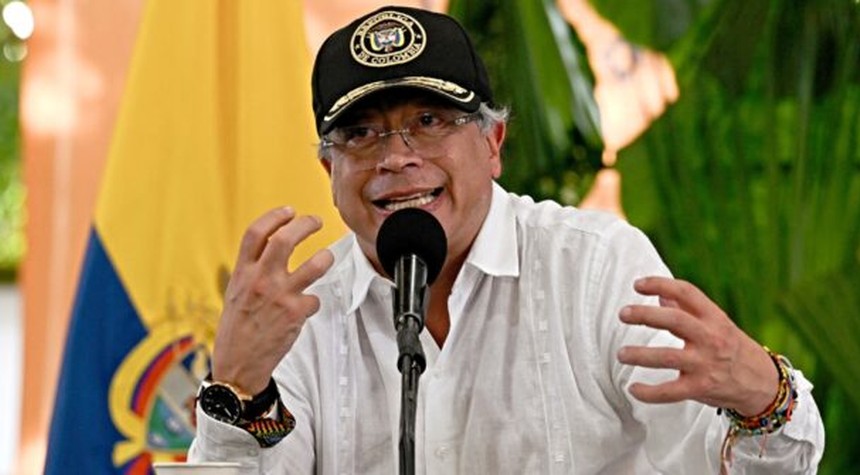
The diplomatic relationship between the United States and Colombia has entered turbulent waters following an exchange between President Donald Trump and Colombian President Gustavo Petro regarding the ongoing drug trafficking crisis.
Speaking to reporters following Tuesday’s Cabinet Meeting, President Trump addressed the matter of cocaine production in Colombia with characteristic directness. The President noted that Colombia operates cocaine manufacturing facilities and questioned the logic of the current arrangement whereby these drugs ultimately reach American shores. He made clear that any nation engaged in such activities could face potential military action from the United States.
These remarks prompted a swift and forceful response from President Petro, Colombia’s first leftist president and a former member of the Marxist M19 terrorist organization. Through social media channels, Petro issued what many observers interpret as a veiled threat, warning Trump not to “awaken the Jaguar” and characterizing any attack on Colombian sovereignty as an act of war.
The facts surrounding this dispute merit careful examination. Colombia remains the world’s leading producer of cocaine. Recent data from the United Nations Office on Drugs and Crime indicates that cocaine production in Colombia has reached record levels under Petro’s administration. This surge occurred despite Petro’s claims that his government has dismantled more than 18,000 drug manufacturing laboratories.
President Petro has advocated for the legalization of cocaine and has publicly stated his belief that the drug poses less harm than sugar, a position that places him far outside the mainstream of international drug policy. His approach to combating narcotics trafficking has proven notably lenient, and former members of his own administration have made serious allegations regarding his personal conduct.
The current tensions represent an escalation of longstanding animosity between the two leaders. Petro has repeatedly criticized American military operations against drug trafficking vessels in Caribbean waters, characterizing precision strikes against these targets as murder. Notably, he has insisted that individuals aboard drug-running vessels should be classified not as traffickers but as workers in the drug trade, a distinction that reveals much about his philosophical approach to the problem.
The Trump administration has not remained idle in the face of Colombia’s deteriorating performance on counter-narcotics efforts. Last September, President Trump formally designated Colombia as having failed to adhere to international counter-narcotics agreements. In October, the Treasury Department imposed sanctions on President Petro himself for engaging in activities that undermine drug interdiction efforts.
This diplomatic impasse raises serious questions about the future of United States-Colombia relations, a partnership that has endured for two centuries. The choice before President Petro appears straightforward. He can continue his current policies and rhetoric, further damaging relations with Colombia’s most important ally, or he can recognize that effective action against drug production serves both nations’ interests.
The American people have made clear their expectations regarding the flow of illegal drugs into this country. President Trump’s willingness to consider military options reflects the gravity of a crisis that claims tens of thousands of American lives annually. Whether Colombia’s leadership will respond with cooperation or continued defiance remains to be seen, but the stakes for both nations could hardly be higher.
Related: Pope Leo XIV Pays Tribute at Lebanon Port Where 200 Died in Unexplained 2020 Blast