
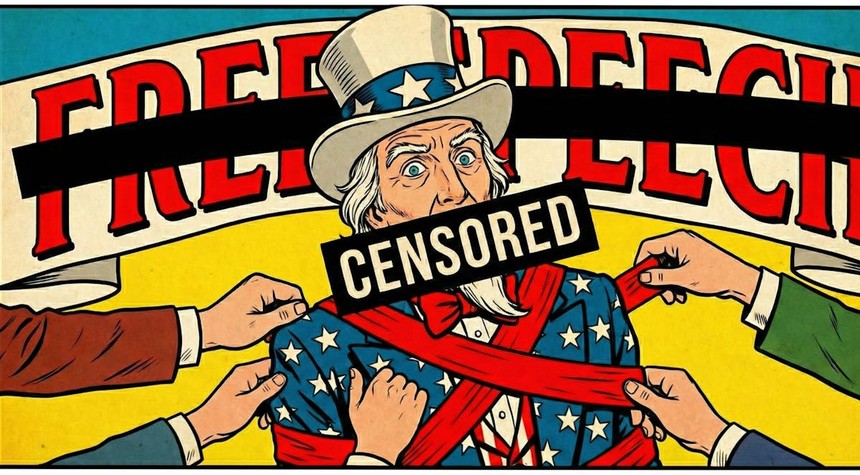
The European Union’s assault on free expression has moved from theoretical concern to documented reality, as testimony before the United States House Judiciary Committee this week made unmistakably clear.
When witnesses last appeared before the Committee in September, the Digital Services Act represented a looming threat to speech freedoms. The law’s potential to regulate content beyond European borders, reaching into American discourse itself, seemed to many observers an alarmist projection. Those doubts have now been dispelled by the evidence.
The European Commission’s recent imposition of enormous fines against the social media platform X demonstrates the concrete implementation of what can only be described as a censorship industrial complex with global reach. This is not hyperbole. A new congressional report corroborates that American technology companies are already implementing European Union content moderation policies to avoid similar punitive measures.
The strategy emanating from Brussels follows a deliberate pattern: launch multiple investigations, layer additional regulations, impose financially crippling penalties, and ultimately force compliance or elimination of platforms that champion unrestricted speech. The European political establishment views robust free expression as an existential threat to its authority.
The implications extend far beyond any single company’s balance sheet. Europe’s restrictive speech regime is being exported worldwide through mandatory global content moderation standards. European officials have made clear their intention to ensure that all online speech conforms to their definitions of “illegal content” while preventing “systemic risk” to public discourse. These elastic terms provide cover for suppressing lawful expression that challenges prevailing orthodoxies.
The human cost of this censorship apparatus deserves attention. Finnish parliamentarian Päivi Räsänen has endured more than six years of criminal prosecution for peacefully expressing her Christian religious beliefs. Her case exemplifies how European speech restrictions criminalize viewpoints that would receive full constitutional protection in the United States.
The question Americans must confront is whether they will permit foreign governments to dictate the boundaries of permissible speech for American citizens. The Digital Services Act and similar European regulatory frameworks represent an extraterritorial assertion of power over American discourse.
European elites have constructed a system designed to either bankrupt companies that resist censorship demands or force their capitulation. The choice offered to American technology firms is stark: adopt European speech codes or face financial destruction through escalating fines and regulatory harassment.
This represents more than a commercial dispute over regulatory compliance. The fundamental American principle that government should not determine which ideas citizens may express or encounter stands in direct conflict with the European model of managed speech.
The congressional investigation has documented how this European regulatory export is already reshaping American companies’ content policies. When American firms implement European censorship standards to maintain access to European markets, those restrictions inevitably affect American users as well.
The stakes could not be higher. If European governments succeed in imposing their speech restrictions on American platforms, they will have accomplished through regulatory pressure what they could never achieve through direct legislation on American soil.
The defense of free expression requires vigilance precisely because censorship advances through incremental steps, each justified by seemingly reasonable concerns about harmful content. Yet the pattern is clear: elastic definitions of prohibited speech expand to encompass any expression that challenges those in authority.
Americans have long understood that free speech includes the right to express ideas that others find offensive, wrong, or dangerous. This principle, while sometimes uncomfortable, represents the foundation of self-government. Citizens cannot make informed decisions if governments determine which arguments they may hear.
The European Union’s censorship campaign will succeed only if it goes unchallenged. The congressional investigation represents an essential first step in documenting and resisting this threat to American liberty.
Related: Washington Raises Alarm Over Chinese Infrastructure Project in Peru