
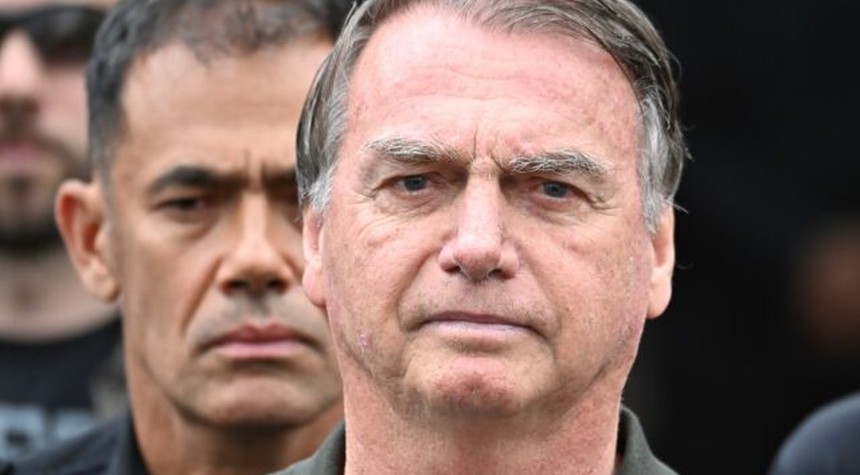
Brazilian Supreme Federal Tribunal Justice Alexandre de Moraes ordered former President Jair Bolsonaro to begin serving a 27-year and three-month prison sentence on Tuesday, marking a significant turning point in one of Latin America’s most politically charged prosecutions.
The 70-year-old conservative leader officially began serving his sentence at the Regional Superintendency of the Federal Police in Brasília, where he has been held since Saturday following an incident involving his electronic monitoring device. According to the tribunal’s press release, Bolsonaro’s defense team allowed the deadline for additional legal motions to pass without response, effectively closing the door on immediate appeals.
The sentence stems from what the Brazilian high court has termed a “coup” trial, in which Bolsonaro was convicted alongside more than 30 other individuals of conspiring to overturn the results of Brazil’s contentious 2022 presidential election. The tribunal found the former president guilty of attempted violent abolition of democratic rule of law, coup d’état, participation in an armed criminal organization, aggravated damage, and deterioration of listed heritage sites.
That 2022 election saw Bolsonaro narrowly lose to radical leftist Luiz Inácio Lula da Silva, who now serves his third term as president and has publicly stated his intention to seek a fourth term in 2026. The circumstances surrounding that election remain disputed among Bolsonaro’s supporters, who have questioned various aspects of the electoral process.
The practical implications of this sentence extend far beyond the prison term itself. Brazilian law mandates that the conviction bars Bolsonaro from seeking public office for the duration of his sentence. However, because the conviction originated from Brazil’s highest court, an additional eight-year ban applies after the sentence concludes, effectively removing Bolsonaro from political life for 35 years. Should he live to complete this prohibition, he would be 105 years old before becoming eligible to run for office again in 2060.
Legal experts familiar with Brazilian criminal law note that despite the lengthy sentence, Bolsonaro could potentially serve between five and seven years in maximum security before becoming eligible for transfer to a less restrictive facility. Brazilian law permits first-time offenders to move to more lenient custody after completing a minimum portion of their sentence, with the exact calculation depending on the severity of the charges and what the law describes as “subjective” factors, including prison conduct.
The Supreme Federal Tribunal has not yet determined whether Bolsonaro will be transferred from the Federal Police facility to a maximum security prison.
Last week, Justice de Moraes rejected a request from Bolsonaro’s legal team seeking house arrest on humanitarian grounds. The former president suffers from various medical conditions and recurring health complications, many stemming from a 2018 assassination attempt during his presidential campaign, when an assailant stabbed him at a political rally.
The case continues to divide Brazil along political lines and raises questions about judicial independence and the criminalization of political opposition in Latin America’s largest democracy. For observers of democratic institutions worldwide, the prosecution of a former head of state on such charges, and the extraordinary length of the sentence imposed, represents a development with implications extending well beyond Brazil’s borders.
Related: British Prime Minister Urges Prince Andrew to Testify in Epstein Investigation