
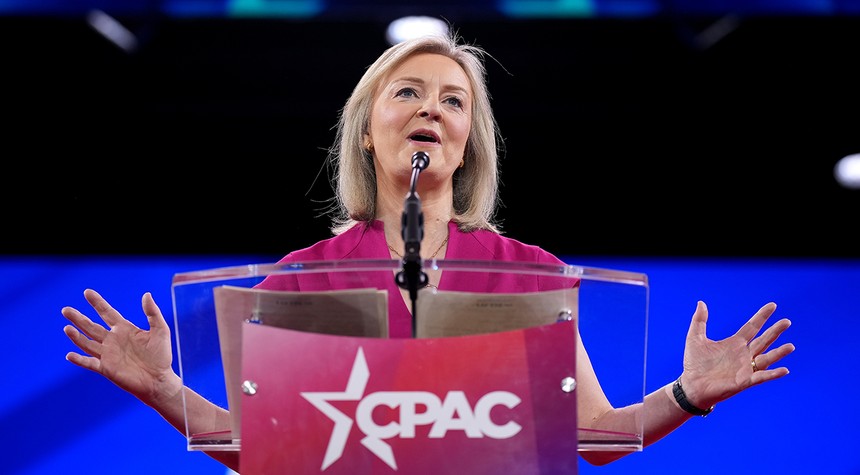
Former British Prime Minister Liz Truss has embarked on a new venture to challenge the accepted narrative of her tumultuous 49-day tenure in 2022, launching a YouTube program titled “The Liz Truss Show” alongside a private membership organization for what she terms “pro-growth leaders.”
In recent statements, Truss offered a markedly different account of the events that led to her resignation, directly attributing the market crisis that ended her premiership to actions taken by the Bank of England rather than her own economic policies.
“The fact that I was sabotaged by the Bank of England, who announced the sale of gilts the day before my mini-budget and then failed to properly regulate the pension market. That was actually the cause of the crisis in 2022,” Truss stated, referring to the financial turmoil that forced her from office.
The Bank of England has maintained a fundamentally different position on these events. The institution’s analysis concluded that Truss’s mini-budget itself triggered a precipitous decline in gilt prices, substantially increasing the government’s borrowing costs. This financial shock reverberated throughout British markets, compelling pension funds to liquidate gilt holdings and ultimately requiring Bank of England intervention to restore market stability. The Bank of England declined to provide additional comment on Truss’s recent assertions.
Truss’s new media platform represents more than simply an attempt at historical revision. She has indicated her intention to address what she characterizes as internal opposition during her brief time in power, specifically targeting “conservatives in name only” who she believes undermined her administration. The phrase notably echoes President Donald Trump’s criticism of Republican establishment figures.
The parallels between Truss and Trump extend beyond rhetorical style. Truss expressed considerable frustration with mainstream media institutions, explicitly aligning herself with Trump’s adversarial stance toward major news organizations. She voiced support for Trump’s announced intention to pursue a five billion dollar lawsuit against the British Broadcasting Corporation over edited footage from January 6, 2021, that appeared in an investigative series.
“I share President Trump’s annoyance,” Truss said, adding that such outlets “do fake news the whole time.”
The former prime minister has framed her YouTube venture as an effort to fundamentally reshape political and economic discourse in Britain. She maintains that accurate information about her tenure has been systematically suppressed and that British citizens remain uninformed about critical issues including free speech and migration.
Truss has also established the Leconfield, described as a private club for leaders committed to pro-growth economic policies, suggesting her intention to build an institutional framework around her political philosophy despite her brief time in office.
Whether Truss can successfully reframe the historical record remains uncertain. The events of 2022 have been extensively documented and analyzed by financial institutions, academic economists, and journalists across the political spectrum. Her mini-budget, which included substantial unfunded tax cuts, provoked an immediate and severe market reaction that has become a cautionary tale in economic policy circles.
Nevertheless, Truss appears determined to present an alternative account, positioning herself as a victim of institutional resistance rather than as an architect of failed policy. Her new platform will test whether there exists sufficient appetite among British conservatives for this revisionist narrative, and whether digital media can provide the kind of unfiltered communication channel that has proven effective for populist political figures in the United States.
Related: Zelenskyy Seeks Western Security Guarantees to Hold Elections After Trump Criticism