
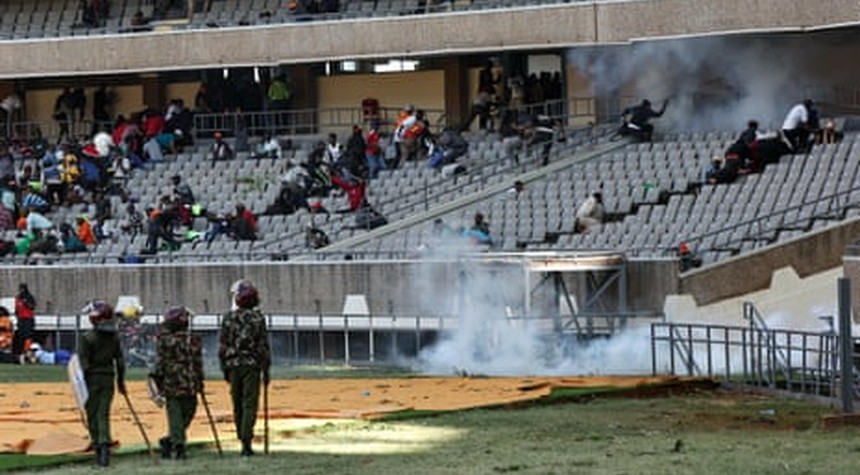
The death of veteran Kenyan opposition leader Raila Odinga has sparked violent clashes in Nairobi, resulting in four fatalities after security forces confronted massive crowds attempting to pay their respects. The incident highlights the deep political divisions and passionate following that Odinga, a transformative figure in Kenya’s democratic evolution, commanded throughout his career.
Odinga, who passed away at 80 while receiving medical treatment in India, leaves behind a complex legacy as both a former political prisoner and a five-time presidential candidate. His death has unleashed a wave of emotional responses from supporters, particularly among the Luo community in western Kenya, where many believed electoral fraud denied him the presidency.
The situation deteriorated rapidly when thousands of mourners, many arriving before dawn, breached the gates of Nairobi’s main stadium. Military personnel responded by firing warning shots, while police deployed tear gas to disperse the surging crowds. Initial reports confirmed two fatalities from gunfire at the stadium, with the death toll later rising to four and numerous injuries reported.
The day’s chaos extended beyond the stadium. Earlier, mourners overwhelmed security at Nairobi’s international airport, disrupting a formal military honors ceremony planned for Odinga’s arrival. The incident forced a two-hour suspension of airport operations and demonstrated the challenges authorities face in maintaining order during this sensitive period.
What’s particularly noteworthy is how this unrest reflects Kenya’s ongoing struggle with political stability and crowd control. Despite Odinga’s recent cooperation with President William Ruto’s administration, the violent response to his death underscores the persistent tensions in Kenyan society.
The facts speak for themselves: a former opposition leader who transformed into a unifying figure through a political pact with his former rival now has mourners dying in his name. This tragic irony exemplifies the complex nature of African democracy and the powerful hold that charismatic leaders maintain over their supporters.
Young Kenyans, particularly those born after the country’s transition to multi-party democracy in 1991, have been vocal about Odinga’s influence on their political freedoms. As university student Felix Ambani Uneck noted at the stadium, “He fought tirelessly for multi-party democracy, and we are enjoying those freedoms today because of his struggle.”
This outbreak of violence raises serious questions about Kenya’s ability to manage large-scale public gatherings and the underlying social tensions that continue to plague one of East Africa’s most significant economies. The incident serves as a stark reminder that despite progress in democratic institutions, the path to stable democracy remains challenging.
Moving forward, Kenyan authorities must address both the immediate security concerns and the deeper political divisions that this tragedy has exposed. The response to Odinga’s death may well become a defining moment in Kenya’s ongoing journey toward democratic maturity.
Related: South Korea Issues Travel Ban After Crime Surge in Cambodia