
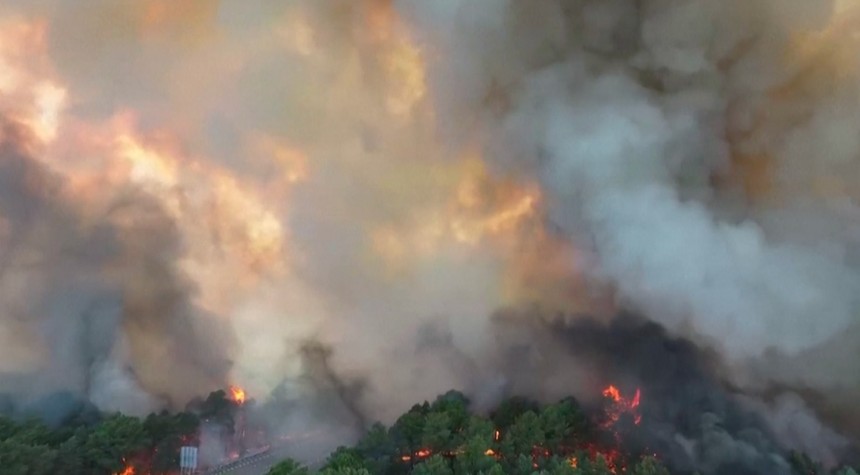
A massive wildfire erupted in the Fontainebleau forest southeast of Paris on Sunday, consuming approximately 1,900 acres and forcing the deployment of aerial firefighting resources as France endures its third significant heat wave since May.
The blaze, which authorities characterized as exceptionally virulent and unprecedented in scale, began late Sunday afternoon roughly 40 miles from the French capital. By early Monday morning, the fire continued its advance despite the efforts of some 400 firefighters working to establish containment lines around the perimeter.
Local officials ordered the evacuation of approximately 15 homes in the village of Vaudoue, while firefighting crews positioned themselves to defend several additional communities threatened by the advancing flames. The Seine-et-Marne fire service suspended aerial operations at nightfall, a standard safety protocol that nonetheless allowed the fire to gain ground during the critical overnight hours.
The timing of this conflagration could scarcely have been worse for the French transportation system. The fire erupted on the first major weekend of the summer holiday season, just ahead of the July 14 Bastille Day celebrations. A principal highway in the region was partially closed, and the high-speed rail line serving southeastern France experienced significant disruptions, compounding the challenges faced by thousands of travelers.
This incident underscores a troubling pattern that has emerged across the European continent in recent months. The Paris region has now experienced three distinct heat waves since May, each contributing to dangerously dry conditions that have elevated fire risk throughout the area. These successive waves of extreme temperatures have shattered records in multiple European nations and contributed to thousands of excess deaths across France, Belgium, Britain, and Spain, according to official estimates.
The World Weather Attribution group, an international consortium of climate scientists, issued a stark assessment regarding June’s heat waves, concluding that such extreme temperatures would have been virtually impossible without the influence of climate change. This scientific determination adds weight to growing concerns about the frequency and intensity of such weather events.
The broader European picture remains equally concerning. Several nations have recorded their highest average temperatures in documented history, suggesting that what was once considered exceptional weather may be becoming the new normal. These conditions have strained emergency services, disrupted economic activity, and raised serious questions about infrastructure preparedness for an era of more frequent extreme weather events.
French authorities have not yet determined the cause of the Fontainebleau fire, though investigations are ongoing. The historic forest, renowned for its natural beauty and popular with hikers and climbers, represents a significant natural resource for the region.
As firefighting operations resume with Monday’s daylight, the focus remains on establishing defensive perimeters around threatened communities and preventing further spread of the flames. The outcome of these efforts will likely depend significantly on weather conditions in the coming days, with any relief from the current heat wave potentially providing firefighters with the advantage they need to bring this massive blaze under control.
Related: Locked Emergency Exits Trapped Victims in Deadly Bangkok Nightclub Fire