
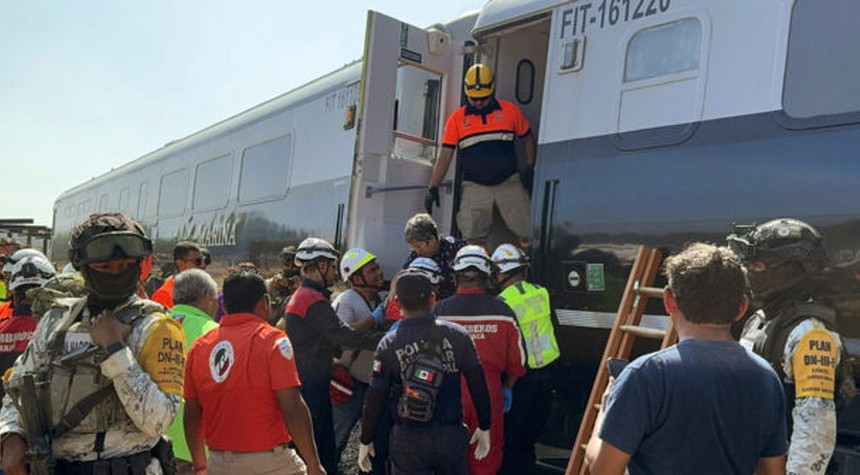
A passenger train derailment in southern Mexico has claimed at least 13 lives and left nearly 100 people injured, raising serious questions about the safety of the nation’s ambitious new rail infrastructure projects.
The Interoceanic Train, carrying 250 passengers and crew, derailed Sunday near the town of Nizanda in Oaxaca state. The train operates along the Interoceanic Corridor of the Isthmus of Tehuantepec, a strategic route connecting Mexico’s Atlantic and Pacific coasts.
According to the Mexican Secretary of the Navy, nine crew members and 241 passengers were aboard when the train’s main engine derailed. The official death toll stands at 13, with 98 injured. As of Sunday evening, 36 victims remained under medical care, while 139 passengers escaped serious harm.
Video footage recorded by passengers inside the derailed cars captured the chaos immediately following the accident. Voices can be heard offering reassurance to trapped passengers, promising help would arrive. Additional footage showed Civil Protection personnel, Navy officials, and civilian volunteers working to evacuate injured passengers, including one woman being carried on a stretcher while wearing a neck brace.
Mexican President Claudia Sheinbaum responded swiftly to the disaster, directing the Secretary of the Navy and the Undersecretary for Human Rights to travel to the scene. Representatives from Mexico’s social security institutes were also dispatched to assist affected families. The president expressed gratitude for the support provided by Oaxaca’s governor and pledged continued updates as the situation develops.
The cause of the derailment remains under investigation. However, survivor accounts paint a troubling picture. One passenger, who was traveling in the rear car with his family and sustained only minor injuries, reported that the train appeared to be traveling at excessive speed. He suggested the possibility of brake failure, though this has not been officially confirmed.
This incident marks the sixth accident involving either the Maya Train or the Interoceanic Train since March, a disturbing pattern that demands scrutiny. Both rail projects represent cornerstone initiatives of Mexico’s current and previous administrations, designed to boost economic development and improve transportation infrastructure across the country’s southern regions.
The frequency of these accidents raises legitimate concerns about construction standards, maintenance protocols, and operational safety measures. For a nation investing heavily in rail infrastructure as an engine of economic growth, ensuring passenger safety must remain paramount.
The Interoceanic Corridor project, while economically promising, now faces questions about whether adequate safety measures were implemented during its rapid development. The international community will be watching closely to see how Mexican authorities respond to this latest tragedy and what steps are taken to prevent future disasters.
As rescue operations conclude and investigators begin their work, the families of the 13 victims and the dozens still recovering from injuries deserve answers. The promise of modern infrastructure means little if it cannot be delivered safely.
Related: Israeli Prime Minister Travels to Florida for Discussions on Gaza Peace Plan