
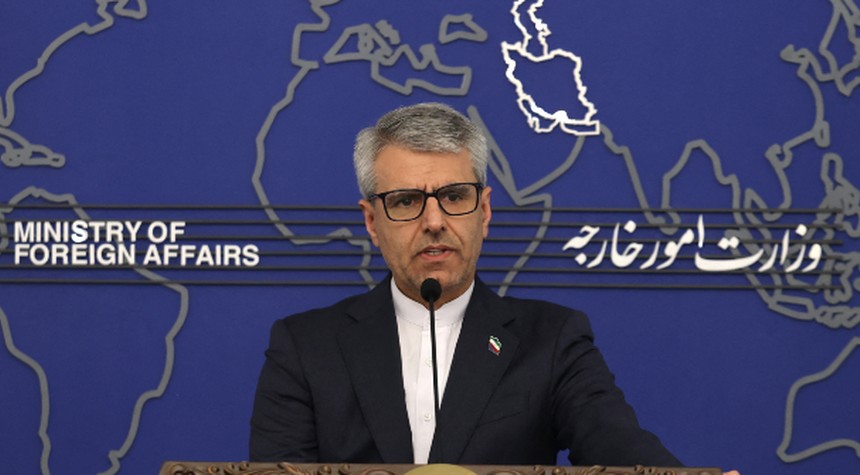
The Iranian Foreign Ministry has put forward an extraordinary claim regarding Sunday’s American military operation that successfully extracted a downed pilot from Iranian territory. Tehran now suggests the rescue may have served as cover for an attempted raid on Iran’s enriched uranium stockpile.
Iranian Foreign Ministry spokesman Esmail Baqaei raised questions about the geographical discrepancies in the operation during a Monday briefing. He noted that the location in Kohgiluyeh and Boyer-Ahmad Province where the pilot was reportedly recovered sits at a considerable distance from areas in central Iran where American forces allegedly attempted additional landings.
“The possibility that this was a deception operation to steal enriched uranium should not be ignored at all,” Baqaei stated, directly challenging the narrative of a straightforward rescue mission.
The Iranian spokesman disputed American characterizations of the operation as an unqualified success. While United States officials have described a mission executed without American casualties and with significant losses inflicted on Iranian forces who attempted interference, Baqaei painted a different picture. He referenced “many questions and uncertainties” surrounding the operation and characterized it as a “disaster” for American military forces.
These Iranian claims appear designed to reframe a successful American military operation as something more ambitious and ultimately unsuccessful. Tehran’s narrative centers on approximately 900 pounds of near-weapons-grade uranium that Iran has enriched over the past decade.
Reports emerged last week that President Donald Trump had requested Pentagon planners develop options for a special forces operation to secure and remove this uranium stockpile from Iranian territory. Such an operation would have required substantial resources, including a major airlift of American troops and excavation equipment, construction of a temporary runway, and a complex effort to locate and extract the material from underground storage facilities.
Iranian military spokesman Ebrahim Zolfaghari claimed Sunday that the United States attempted to execute this elaborate plan in compressed timeframe, using the pilot rescue as a diversion. He described what he called “the so-called U.S. military rescue operation” as having been “completely foiled” at an abandoned airport in southern Isfahan.
Zolfaghari further asserted that President Trump’s statements regarding the pilot rescue constituted “empty rhetoric and diversion,” while claiming that events on the ground demonstrated “the superior position of Iran’s powerful armed forces.”
The demonstrable facts tell a different story. American forces successfully recovered their downed pilot, returned him safely to friendly territory, and inflicted casualties on Iranian forces without sustaining losses of their own. These are not the hallmarks of a failed operation.
Nevertheless, the successful execution of this rescue operation has prompted strategic analysis about future American capabilities in the region. The operation demonstrated that United States forces can conduct sustained operations with substantial force packages deep inside Iranian territory for extended periods, not merely brief raids by small special operations teams.
This proven capability may influence future decision-making regarding potential operations against strategic Iranian targets, including facilities in the Straits of Hormuz or Kharg Island. The successful rescue has provided concrete evidence of American operational reach and effectiveness, factors that weigh heavily in any calculation of military options.
What remains clear is that Iran finds itself in the position of having to explain how American forces operated successfully within its borders despite Tehran’s extensive air defense networks and military presence. That is the reality no amount of alternative narratives can obscure.
Related: Israel Confirms Killing of Iran’s Senior Intelligence Chief in Precision Strike