
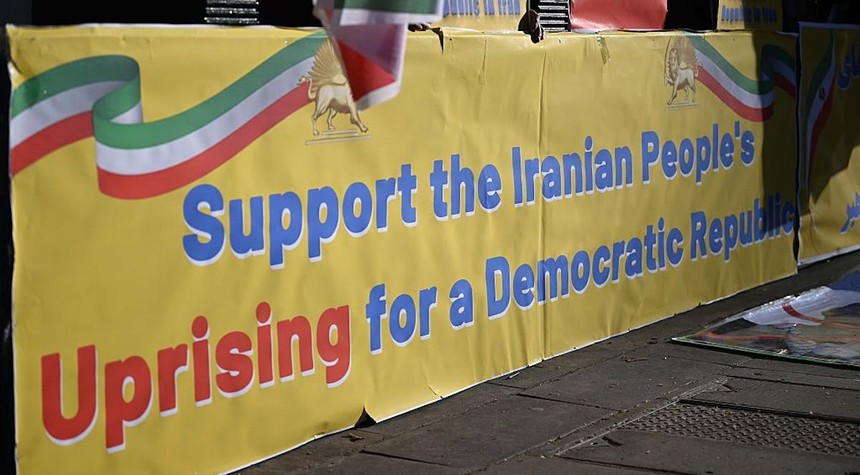
Iranian dissidents are raising pointed questions about the conspicuous silence from Western progressive movements as casualties mount under Tehran’s authoritarian rule.
Masih Alinejad, one of Iran’s most prominent exiled activists, has issued a sharp rebuke of left-leaning political factions in America and Europe, characterizing their silence as deliberate rather than inadvertent.
“The hypocrisy is shocking,” Alinejad stated in recent remarks. “The silence of the Left and liberals in America and Europe is not accidental. It is ideological, because they believe that our suffering, the suffering of Iranian women and men, thousands of people being killed or injured, is not something they can discuss because it will expose their hypocrisy and reveal how they sympathize with our killers, with Islamist terrorists.”
The criticism strikes at the heart of a growing tension between Iranian reform movements and Western progressive circles that have, in recent years, adopted increasingly sympathetic postures toward certain Islamic practices and Middle Eastern political movements.
Alinejad pointed to her campaign against compulsory veiling in Iran as a case study in ideological inconsistency. When she launched efforts to challenge mandatory hijab laws, she encountered resistance from the very Western liberals who might have been expected to champion women’s autonomy. The reason, she suggests, lies in a fundamental misreading of religious coercion as cultural expression.
“When I launched a campaign against compulsory veiling, the same Left and liberals kept quiet because they told us that hijab is a sign of resistance in America,” she explained. The activist drew a direct line between this stance and Western progressive support for Hamas, noting that both represent what she views as a romanticization of Islamist movements.
The disconnect becomes particularly stark when examining the phrase “Free Palestine,” which carries vastly different meanings depending on who speaks it. For many Western progressives, the slogan represents opposition to Israeli policies. For Iranian dissidents, however, the same words carry a different imperative.
“When we Iranians say ‘Free Palestine,’ we mean free Palestine from Islamist terrorists like Hamas and the Iranian regime,” Alinejad clarified, highlighting the gulf between Iranian opposition movements and their potential Western allies.
The broader implication of these remarks extends beyond any single conflict or region. Iranian activists are effectively arguing that Western progressive movements have adopted a framework that prioritizes anti-Western narratives over the actual liberation of oppressed peoples, particularly when those doing the oppressing claim anti-imperialist credentials.
This represents a significant challenge for international human rights advocacy. If ideological considerations prevent Western activists from supporting reform movements in countries like Iran, the practical effect is to abandon those fighting for freedoms that Western progressives claim to champion.
The Iranian regime’s sponsorship of groups like Hamas further complicates matters, creating a web of alliances that some Western observers appear reluctant to examine critically. For Iranian dissidents risking their lives to challenge theocratic rule, this reluctance translates into isolation at precisely the moment when international solidarity might prove most valuable.
As violence continues in Iran and throughout the Middle East, the questions raised by activists like Alinejad demand answers that transcend comfortable political narratives.
Related: Former Australian Foreign Ministers Question Alliance with United States Under Trump