
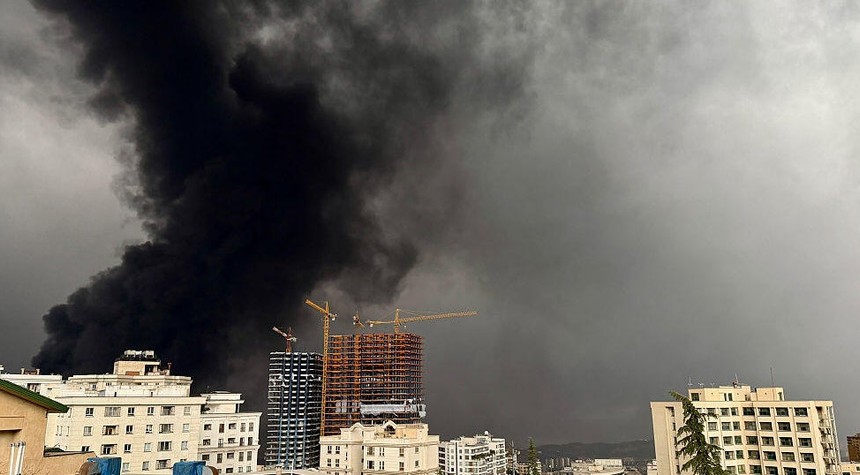
Iranian missiles struck Tel Aviv on Sunday as the Islamic Republic’s promised retaliation against recent military actions continues to unfold across the Middle East. The Israeli Defense Forces confirmed detecting multiple missiles launched from Iranian territory and activated defense systems to intercept the incoming threats.
The IDF issued immediate shelter orders to Israeli residents, emphasizing that adherence to safety protocols saves lives. Despite interception efforts, falling shrapnel injured three people in Tel Aviv, including one man in serious condition who received treatment from Magen David Adom, Israel’s national emergency medical service.
The escalation follows a joint American and Israeli military operation against Iranian targets on February 28, which has set in motion a dangerous cycle of retaliation that now threatens to engulf the broader region. The conflict’s expansion has raised alarm among international observers and regional neighbors alike.
From St. Peter’s Square, Pope Leo XIV issued an urgent appeal for an end to hostilities across the Middle East. Speaking during the Angelus prayer, the pontiff expressed deep concern over what he termed the “roar of bombs” and the spreading climate of hatred and fear gripping the region.
The Pope specifically warned that beloved Lebanon and other neighboring nations risk being drawn into instability should the conflict continue its current trajectory. He called upon the faithful to pray that weapons would fall silent and create space for dialogue where the voices of affected peoples might be heard.
The economic ramifications of this expanding conflict are already being felt globally. Iranian Parliament Speaker Mohammad Bagher Qalibaf warned that oil prices will continue their upward trajectory as long as hostilities persist. In a pointed critique, he referenced recent American assurances about oil price stability, noting that such predictions have proven premature.
“If the war continues like this, there will be neither a way to sell oil nor the capacity to produce it,” Qalibaf stated, attributing the crisis to what he characterized as Israeli Prime Minister Benjamin Netanyahu’s delusions.
The speaker’s warnings carry weight in global markets. West Texas Intermediate crude rose 6.8 percent to $86.57 per barrel on Friday morning, while Brent crude jumped 4.7 percent to $89.44. Both benchmarks are trading near their highest levels since April, with analysts projecting further increases should the conflict intensify or spread.
The situation presents a complex challenge for American interests in the region. Rising oil prices threaten to undermine economic stability domestically while the expanding conflict risks drawing American forces deeper into Middle Eastern hostilities at a time when strategic focus has shifted toward other global concerns.
The international community now watches anxiously as two scenarios unfold simultaneously: the immediate tactical exchanges between Iran and Israel, and the broader strategic question of whether regional powers can contain this conflict before it metastasizes into a wider war that would have devastating consequences for global energy markets and international stability.
What remains clear is that the decisions made in the coming days by leaders in Tehran, Jerusalem, and Washington will determine whether this dangerous moment represents a peak in tensions or merely the beginning of a more comprehensive regional conflagration.
Related: United States Launches Massive Air Campaign Against Iranian Military Infrastructure