
Islamic State in the Sahel has claimed responsibility for a coordinated assault on the international airport and adjacent military air base in Niamey, Niger’s capital, marking another escalation in the terrorist group’s campaign across West Africa’s unstable Sahel region.
The attack commenced shortly after midnight on Thursday when motorcycle-riding militants launched what the group described as a “surprise and coordinated” strike employing heavy weaponry and drone technology. The assault targeted facilities approximately six miles from the presidential palace and Base Aérienne 101, a military installation that has previously hosted American forces and more recently Russian troops.
Intelligence monitoring organizations tracking jihadist communications confirmed that the regional Islamic State affiliate released statements through its propaganda apparatus claiming the operation. The authenticity of these claims, while not independently verified, follows a pattern consistent with the group’s recent activities in the region.
The attack resulted in damage to at least three commercial aircraft. An Ivorian carrier, Air Côte d’Ivoire, lost one plane in the assault, while the Togolese airline Asky sustained damage to two of its aircraft. Sources within Asky confirmed that airline personnel were secured in their hotels away from the combat zone during the incident and remained in the city, though their travel documents remained in the custody of local authorities.
This latest operation represents a continuation of Islamic State in the Sahel’s increasingly bold tactical posture. The group has demonstrated growing operational capability in recent months, including strikes in the Tillabéri region this past September that claimed more than 120 lives. In October, the organization abducted an American pilot, further highlighting the threat posed to Western interests in the region.
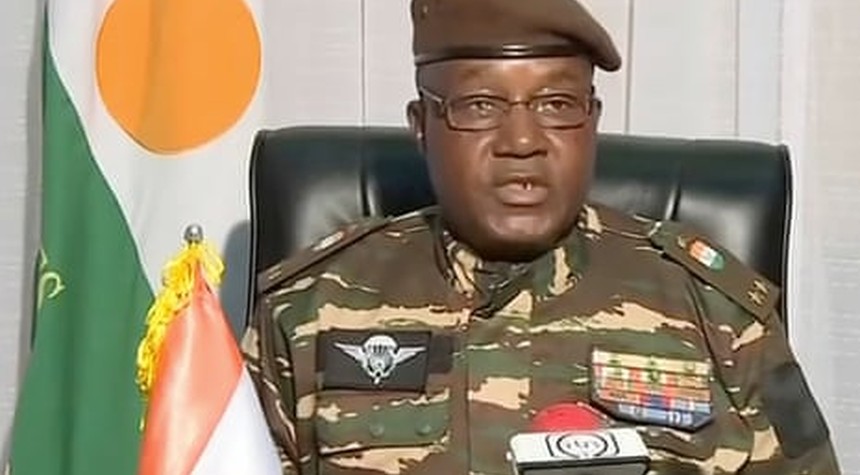
The attack occurs against a backdrop of significant political instability in Niger. The nation has been governed by military junta leadership since the deposing of democratically elected President Mohamed Bazoum in July. This political transition has complicated international counterterrorism cooperation in a region already struggling with porous borders, limited state capacity, and a growing jihadist presence.
The use of drones in this assault merits particular attention from security analysts. The integration of unmanned aerial systems into terrorist tactical operations represents an evolution in capability that poses new challenges for African military forces and their international partners. The coordination of drone strikes with ground assault elements using heavy weapons demonstrates a level of operational sophistication that should concern regional security planners.
Niger’s strategic position in the Sahel has made it a focal point for both counterterrorism efforts and, increasingly, great power competition. The presence of Russian forces at facilities previously occupied by American troops reflects broader geopolitical shifts in the region following the coup. These transitions have raised questions about the continuity and effectiveness of counterterrorism operations at a time when groups like Islamic State in the Sahel appear to be expanding their operational tempo.
The international community now faces difficult questions about how to address the growing terrorist threat in the Sahel while navigating the political complexities created by military governments that have come to power through unconstitutional means.
Related: Questions Mount Over Putin’s Response to Trump Request for Ukraine Strike Pause