
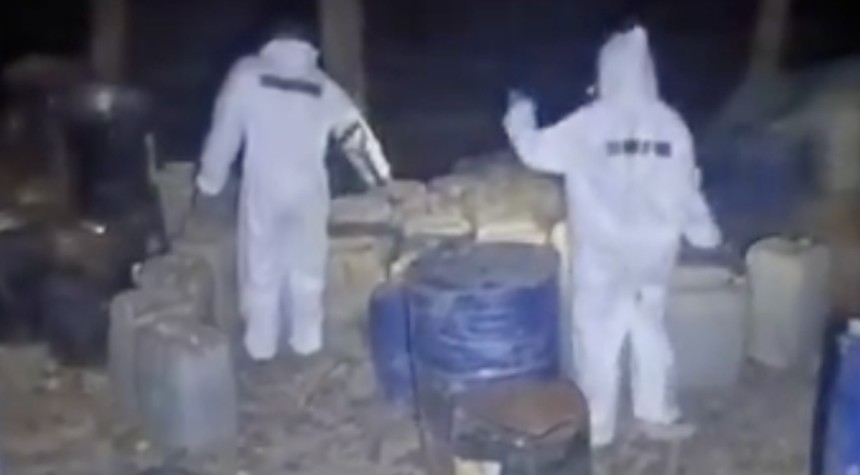
Mexican naval forces have dismantled a clandestine methamphetamine laboratory in the Durango region, neutralizing over 5,000 pounds of the dangerous narcotic and seizing thousands of liters of chemical precursors valued at more than $265 million. The operation represents a significant strike against the narcotics infrastructure that continues to plague both Mexico and the United States.
The naval personnel, equipped with hazmat suits, methodically documented the extensive facility before rendering it inoperable. Video evidence from the raid reveals dozens of containers filled with unknown chemical substances, along with outdoor tanks and processing equipment. The navy has confirmed that all infrastructure at the site has been permanently disabled to prevent future criminal use.
This raid is part of an accelerating pattern of Mexican counter-narcotics operations. In January alone, authorities discovered and dismantled four separate laboratories across multiple regions. The Durango area yielded another facility containing substantial chemical precursor stockpiles. In Sinaloa, home to the cartel bearing that state’s name, forces seized over 1,650 pounds of methamphetamine along with additional precursor materials. Further discoveries were made in Michoacán.
The intensification of these operations comes amid a period of extraordinary violence following the death of Jalisco New Generation Cartel leader Nemesio Rubén Oseguera Cervantes, known by his alias “El Mencho.” The cartel leader died from injuries sustained during a military operation in Jalisco state, the organization’s traditional stronghold. Intelligence sources indicate this operation resulted from enhanced cooperation between American and Mexican authorities under President Claudia Sheinbaum’s administration. While the United States provided crucial intelligence support, no American personnel participated directly in the ground operation.
The death of Oseguera Cervantes triggered immediate and widespread retaliation. Cartel members erected roadblocks throughout the region, employing their standard tactic of burning vehicles to impede military movements. Airlines suspended operations temporarily. Authorities issued shelter-in-place orders for citizens and tourists in affected areas, and several Mexican states cancelled school operations on Monday as a precautionary measure.
The Jalisco New Generation Cartel represents one of Mexico’s most formidable criminal enterprises. Its rapid expansion and sophisticated operations have made it a primary concern for both Mexican and American law enforcement agencies. The organization’s response to its leader’s death demonstrates both its operational capacity and its willingness to engage in public displays of force that disrupt civilian life.
These developments underscore the complex security challenges facing Mexico and the broader region. The discovery of industrial-scale drug laboratories, combined with the violent response to counter-narcotics operations, illustrates the deeply entrenched nature of cartel operations. The $265 million valuation of the seized materials from a single laboratory provides stark evidence of the enormous financial stakes involved in the narcotics trade.
The enhanced cooperation between American and Mexican authorities represents a potentially significant shift in regional security policy. Whether this cooperation can be sustained and expanded remains to be seen, but the successful operation against Oseguera Cervantes suggests that coordinated intelligence efforts can achieve meaningful results against even the most powerful cartel leadership.
That is the situation as it stands today in Mexico’s ongoing struggle against organized crime and narcotics trafficking.
Related: Cuban Coast Guard Kills Four Americans in Territorial Waters Shooting