
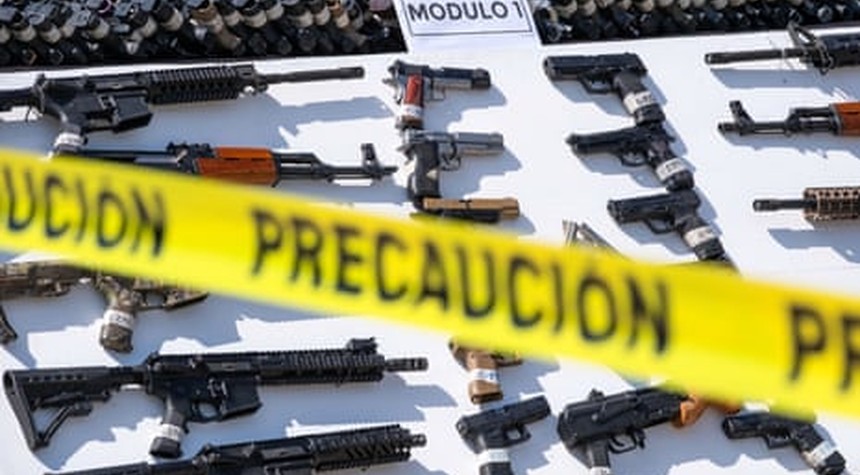
Mexican President Claudia Sheinbaum has issued a direct challenge to Washington regarding the flow of firearms across the southern border, responding to President Donald Trump’s characterization of Mexico as an “epicenter of violence” with a pointed reminder about American responsibility in the ongoing cartel crisis.
The exchange represents a significant diplomatic moment between the two neighboring nations, as Sheinbaum pushed back against Trump’s recent summit remarks with a carefully measured counterargument focused on weapons trafficking from north to south.
“There is something that the United States can help us a lot with: stop the trafficking of illegal weapons from the United States to Mexico,” Sheinbaum stated. “If they stopped the entry of illegal weapons from the United States into Mexico, then these groups wouldn’t have access to this type of high-powered weaponry to carry out their criminal activities.”
The Mexican president cited data indicating that 75 percent of firearms used by Mexican drug cartels originate in the United States. This figure has been at the center of a long-standing dispute between the two nations over who bears greater responsibility for the violence plaguing Mexico’s northern states and border regions.
Trump’s comments at the summit, which included his stated desire to eradicate the cartels, also drew criticism for remarks about Mexico’s president that observers characterized as sexist in nature. The specific content of those remarks has complicated what was already a tense diplomatic exchange over border security and transnational crime.
Mexico has consistently maintained that American gun laws and insufficient enforcement at the border facilitate an “iron river” of weapons flowing southward. These arms include high-powered rifles, automatic weapons, and ammunition that have transformed Mexican cartels into paramilitary organizations capable of challenging government forces.
The issue represents a fundamental disagreement in how the two nations view their shared security challenges. While the Trump administration has emphasized stopping the northward flow of illegal drugs and migrants, Mexican officials have repeatedly called attention to the southward flow of weapons and the American demand for narcotics that fuels cartel operations.
This is not the first time Mexico has pressed Washington on arms trafficking. Previous administrations in both countries have acknowledged the problem, but concrete action has remained elusive. The Mexican government has even pursued legal action against American gun manufacturers, arguing they knowingly facilitate illegal sales that end up arming criminal organizations.
The current exchange highlights the complex interdependence of United States and Mexican security concerns. Trump’s emphasis on eliminating cartels cannot be separated from the question of how these organizations acquire their military-grade weaponry. Similarly, Mexico’s ability to combat these groups depends partly on cooperation from American law enforcement agencies.
As both presidents stake out their positions, the fundamental reality remains unchanged. The border between these two nations represents not just a line on a map, but a two-way corridor where problems flow in both directions. Any serious attempt to address cartel violence must account for this basic truth, regardless of which side of the border holds greater responsibility.
The diplomatic tension between Trump and Sheinbaum appears likely to continue as both leaders face domestic pressure to demonstrate strength on security issues that affect millions of citizens in both nations.
Related: Qatar’s Education Minister Rejects Western Concerns Over Women’s Rights