
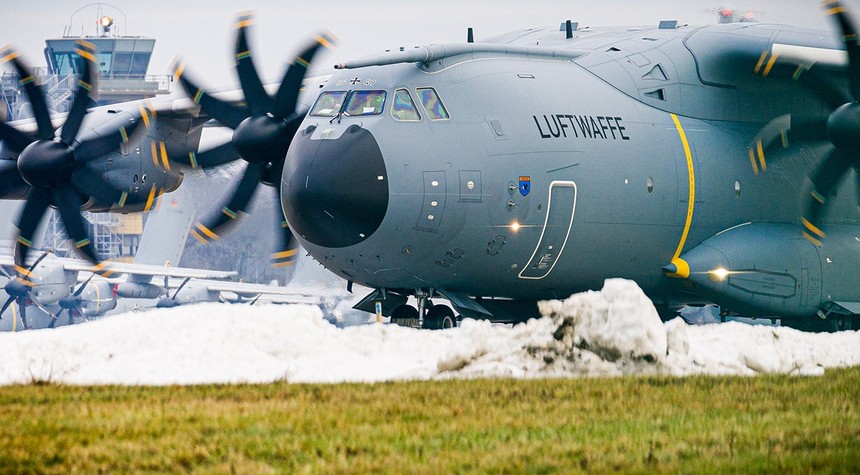
European military forces arrived in Greenland Thursday for a hastily organized two-day exercise, marking a notable escalation in the strategic maneuvering over the Arctic territory as the Trump administration pursues its acquisition.
Denmark has coordinated the deployment of troops from France, Germany, Sweden, Norway, and Britain to demonstrate what officials describe as the alliance’s capacity for rapid military mobilization in the Arctic region. The timing is unmistakable. This show of force comes directly in response to President Trump’s stated intentions to bring Greenland under American control.
The numbers tell a purposeful story. Germany dispatched a reconnaissance team of thirteen personnel. France contributed fifteen mountain warfare specialists, troops particularly suited to Greenland’s forbidding terrain. Sweden sent three officers, Norway two, and Britain one. These are not large forces, but they represent something more significant than their modest size suggests: a coordinated European response to American pressure.
The Danish Ministry of Defense issued a statement Wednesday that acknowledged the changed circumstances in plain language. “The geopolitical tensions have spread to the Arctic,” the ministry declared, explaining that both the Government of Greenland and Danish defense officials had decided to increase military exercise activity on the island in close cooperation with NATO allies.
The statement continued with careful diplomatic phrasing that nonetheless conveyed resolve. “From today, there will be an expanded military presence in and around Greenland, in close cooperation with NATO allies. The purpose is to train the ability to operate under the unique Arctic conditions and to strengthen the alliance’s footprint in the Arctic, benefiting both European and transatlantic security.”
That language merits examination. By emphasizing NATO cooperation and transatlantic security, Denmark appears to be reminding Washington that any move on Greenland affects not merely Danish-American relations, but the broader Atlantic alliance that has underpinned Western security for seventy-five years.
Danish Foreign Minister Lars Løkke Rasmussen has been managing the delicate diplomacy with the Trump administration, seeking to balance Denmark’s relationship with its most powerful ally against its sovereign claim to territory it has controlled for centuries.
The Arctic has emerged as a region of intensifying great power competition. Climate change has opened new shipping routes and made resource extraction more feasible. Russia has substantially increased its military presence in its Arctic territories. China has declared itself a “near-Arctic state” and invested heavily in the region. Now the United States, through President Trump’s unconventional diplomacy, has made clear its own strategic interest in the world’s largest island.
Greenland occupies a position of extraordinary strategic value. Its location provides surveillance capabilities over the North Atlantic and Arctic Ocean. The United States has maintained Thule Air Base there since 1943, a critical installation for missile warning systems and satellite tracking.
What remains uncertain is how this situation will develop. The Trump administration has not detailed precisely how it envisions acquiring Greenland, whether through purchase, long-term lease, or some other arrangement. Denmark has thus far resisted the overture, but the presence of European troops on Greenland soil this week suggests that America’s allies are watching these developments with considerable concern about precedent and principle.
The Arctic exercise will conclude Friday, but the larger question it represents will not be resolved so quickly.
Related: Trump Warns NATO on Greenland as Administration Pursues Strategic Arctic Territory