
The United States Navy has significantly reduced personnel at its Fifth Fleet headquarters in Bahrain to mission-critical staffing levels, according to multiple U.S. officials, as military preparations intensify amid ongoing nuclear negotiations with Iran.
Fewer than one hundred personnel now remain at the facility, representing a substantial drawdown that mirrors actions taken last June prior to Operation Midnight Hammer, when American forces struck Iranian nuclear sites. However, one U.S. official has disputed these accounts, stating that no formal ordered departure has been issued for American personnel or their dependents in Bahrain.
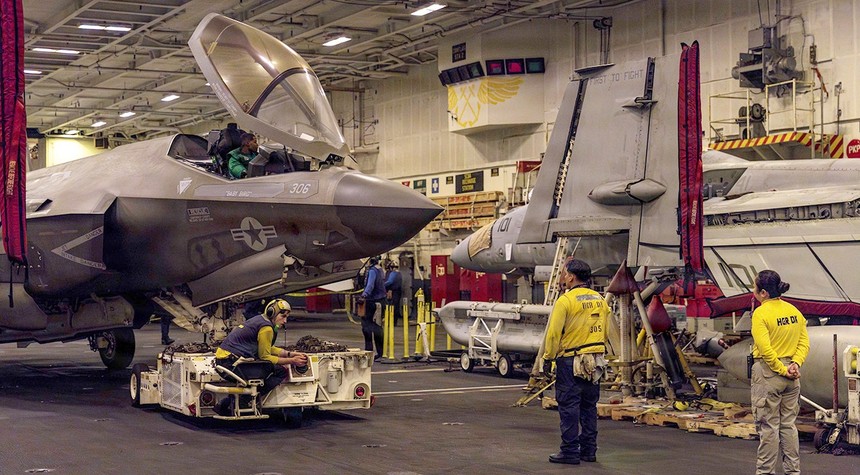
The reduction in staff comes as the United States has been positioning substantial military assets throughout the Middle East in recent weeks. The USS Abraham Lincoln carrier strike group remains deployed to the region, with sailors and Marines conducting regular maintenance operations to maintain aircraft readiness. U.S. Central Command reports that the carrier can sustain continuous airpower and conduct more than one hundred sorties per day, a capability that provides significant operational flexibility should military action become necessary.
These military movements unfold against the backdrop of closely watched negotiations in Geneva, where American representatives are engaged in discussions with Iranian officials regarding Tehran’s nuclear program. The talks represent a critical juncture in addressing Iran’s nuclear ambitions, which President Donald Trump characterized as “sinister” during his State of the Union address earlier this week.
The President made clear that the United States has not received assurances from Iran that it will permanently abandon its pursuit of nuclear weapons. Trump referenced last summer’s Operation Midnight Hammer, noting that Iranian facilities were destroyed and Tehran was warned against rebuilding its weapons program. Despite those strikes and warnings, the President stated that Iran continues to pursue nuclear weapons development.
The current situation bears the weight of history and consequence. Iran’s uranium enrichment activities and missile programs remain central concerns for American national security officials. The question facing negotiators is whether diplomatic engagement can achieve what military strikes temporarily accomplished: halting Iran’s progress toward nuclear weapons capability.
The Fifth Fleet, headquartered in Bahrain since 1995, serves as the primary American naval presence in the Persian Gulf, Red Sea, and Arabian Sea. Its reduction to skeleton staffing suggests that military planners are preparing for multiple contingencies, including the possibility that diplomacy may fail and military action could follow.
For the American personnel and their families who remain in Bahrain, as well as for the broader military presence throughout the region, the coming days and weeks will prove decisive. The positioning of carrier strike groups, the maintenance of aircraft at peak readiness, and the drawdown of personnel at forward headquarters all point toward a military prepared to act if diplomacy cannot produce results.
The international community watches these developments with considerable interest and concern. A nuclear-armed Iran would fundamentally alter the balance of power in the Middle East, threatening American allies and interests throughout the region. Whether through negotiation or force, the United States has signaled its determination to prevent that outcome.
As these events unfold, the facts remain clear: Iran continues its nuclear activities, American military forces stand ready in the region, and negotiations continue in Geneva. What remains uncertain is whether Tehran will make the strategic decision to abandon its nuclear weapons ambitions permanently, or whether the United States will once again be compelled to act militarily to eliminate facilities that threaten regional and global security.
Related: Trump Targets Insurance Companies in State of the Union Healthcare Proposal