
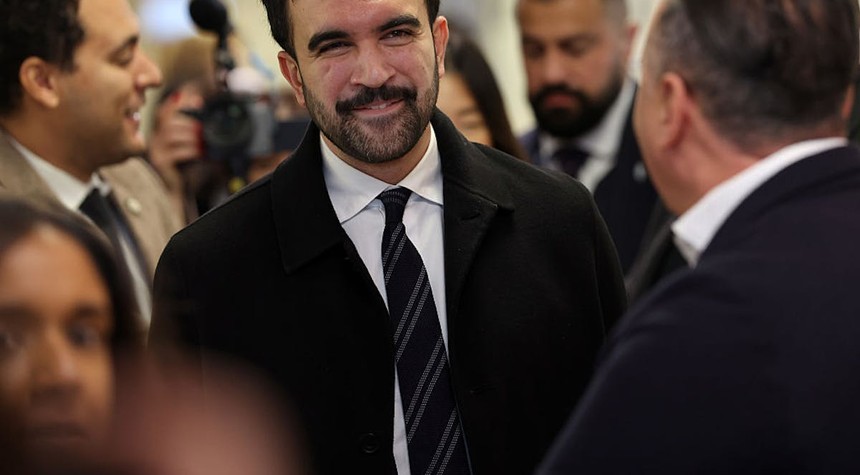
The fundamental contradiction of revolutionary movements has once again emerged in American politics. Zohran Mamdani, the Democratic Socialist candidate who betting markets suggest will likely become New York City’s next mayor, finds himself caught between the radical ideology that propelled his rise and the practical demands of governing the nation’s largest city.
This tension is not new to students of political history. Revolutionary movements, particularly those rooted in Marxist ideology, have historically struggled when confronted with the responsibilities of actual governance. The Democratic Socialists of America, instrumental in Mamdani’s political ascent, remains committed to revolutionary change rather than incremental reform. Their stated objectives include dismantling capitalism and fundamentally restructuring American society. These are not the goals of a party interested in working within existing systems.
Mamdani’s background provides context for understanding this ideological commitment. He comes from a family steeped in radical politics. His father, a Columbia University professor, has made controversial comparisons between American presidents and totalitarian dictators. His parents have long advocated for what they describe as recognizing hierarchies of victimhood based on racial categories. This is the intellectual environment in which the candidate was raised.
The practical challenges are now becoming apparent. Recent reporting indicates that the relationship between Mamdani and the Democratic Socialists of America may face significant strain once he assumes office. The organization has been essential to his success, providing both organizational support and ideological credibility within progressive circles. However, the responsibilities of managing a city of eight million people require compromise, pragmatism, and working within established legal and constitutional frameworks.
Political scientists observing this situation have identified two possible outcomes. Either the Democratic Socialists will allow their candidate a period of adjustment, accepting that governance requires compromise, or they will turn on him as an ideological traitor. If the latter occurs, Mamdani would face opposition from both traditional political opponents and his own supporters, a position that would severely hamper his ability to lead effectively.
There are already signs that Mamdani recognizes these constraints. He has indicated support for retaining the current police commissioner, a decision that suggests awareness of public safety concerns among New York residents. Such positions represent a departure from the more radical elements of his platform and the demands of his most fervent supporters.
This situation reflects a broader truth about American politics. The distance between campaign rhetoric and governing reality remains substantial. Revolutionary movements thrive in opposition, where purity of ideology can be maintained without the complications of actual decision-making. Once in power, however, leaders must confront budgets, legal constraints, public opinion, and the daily needs of constituents.
The coming months will reveal whether Mamdani can navigate these competing pressures or whether he will become another example of how revolutionary movements struggle when forced to govern rather than agitate. For New York City residents, the stakes are considerable. They deserve leadership focused on practical solutions to crime, housing, and economic challenges rather than ideological purity.
The outcome of this tension between radical ideology and practical governance will have implications beyond New York. Other cities have seen similar movements gain political power. How this experiment unfolds may well determine whether Democratic Socialists can transition from opposition to effective governance, or whether their revolutionary commitments make such a transition impossible.
Related: National Guardsman Arrested for Attempting to Provide Military Technology to Russia