
New Zealand has formally requested that the United States deploy fuel tankers to the Pacific region to address mounting economic pressures stemming from the ongoing conflict in the Middle East.
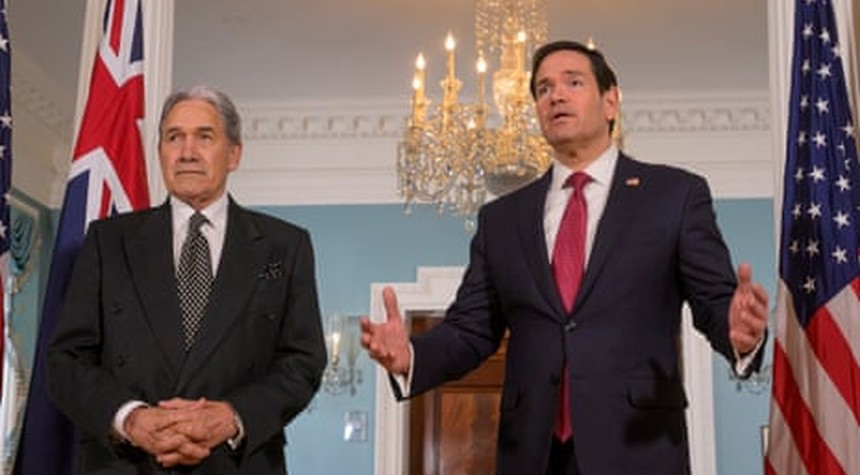
Foreign Minister Winston Peters met with Secretary of State Marco Rubio in Washington on Tuesday, where the two officials discussed bilateral relations, the Iranian conflict, and the precarious situation facing Pacific island nations. The meeting underscored growing concerns about fuel security in one of the world’s most geographically isolated regions.
Peters emphasized to American officials the gravity of the situation facing not only New Zealand but the smaller Pacific nations for which Wellington maintains considerable responsibility. The foreign minister made clear that the economic impacts of the Middle East war are already being felt across the Pacific, where nations depend almost entirely on imported fuel to sustain their economies.
In remarks to New Zealand’s national broadcaster following the meeting, Peters described what he characterized as a “serious discussion” about potential American assistance. The specific request centered on deploying auxiliary tankers to New Zealand for distribution throughout the Pacific region.
The urgency of Peters’ appeal reflects a broader strategic reality. Pacific island nations maintain minimal fuel reserves and possess limited infrastructure to weather supply disruptions. Their geographic isolation compounds these vulnerabilities, as alternative supply routes prove both costly and time-consuming to establish.
Peters stressed the importance of proactive measures rather than reactive responses. He urged American officials not to wait until a crisis materializes but to position resources in advance. According to the foreign minister, the discussion with Rubio yielded positive indications that Washington understands the strategic importance of maintaining fuel security in the Pacific.
This appeal comes as Pacific leaders have increasingly voiced concerns about their exposure to global energy market volatility. In March, multiple Pacific heads of government reached out to foreign partners seeking assistance with oil supplies. Samoa’s Prime Minister La’aulialemalietoa Leuatea Schmidt specifically inquired about New Zealand’s capacity to redirect fuel shipments to his nation in the event of a crisis. Tonga’s Prime Minister Lord Fakafanua revealed that New Zealand and Australia have been sharing intelligence to help his government prepare for potential shortages.
The situation highlights the interconnected nature of global conflicts and regional stability. What occurs in the Middle East reverberates across the Pacific, affecting nations thousands of miles removed from the conflict zone. For small island nations with limited economic diversification, fuel price spikes and supply disruptions can trigger cascading effects across their entire economies.
The meeting between Peters and Rubio represents more than a bilateral discussion about fuel logistics. It reflects the broader strategic competition in the Pacific, where both the United States and China have sought to expand their influence. New Zealand’s appeal to Washington for assistance in supporting Pacific island nations aligns with American interests in maintaining strong partnerships throughout the region.
Whether the United States will commit the requested tanker support remains to be seen, but Peters’ characterization of the discussion as positive suggests American officials recognize the strategic implications of fuel security in the Pacific.
Related: American Forces Strike Iranian Military Targets Following Presidential Ultimatum