
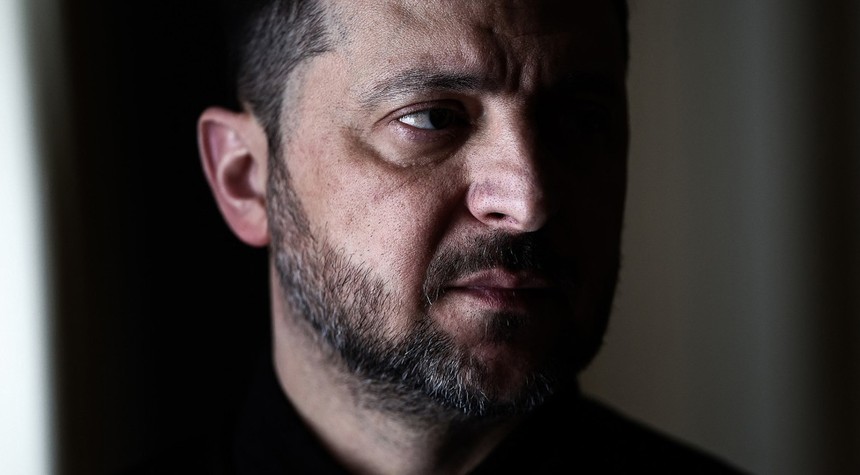
As the war in Ukraine enters its fifth year this Tuesday, President Volodymyr Zelenskyy’s public demeanor has shifted markedly from defiant resolve to barely concealed exasperation. The change reflects a grim reality: despite months of American-led negotiations, the fundamental obstacles to peace remain as intractable as ever.
Ukraine has successfully prevented Russia’s initial objective of complete territorial conquest. Yet this defensive victory has given way to a grinding stalemate that has consumed nearly half a million lives and displaced millions more. The question now is whether diplomatic efforts can break through where military force has reached an impasse.
Zelenskyy’s frustration burst into public view last week when he dismissed what he called “historical nonsense” obstructing the path to diplomacy. His remarks targeted the Russian negotiating position, which continues to assert historical claims over Ukrainian territory. Lead Russian negotiator Vladimir Medinsky has echoed President Vladimir Putin’s contention that much of Ukraine has always belonged to Russia rather than constituting an independent nation.
The Kremlin shows no indication of moderating its demands. Spokesman Dmitry Peskov acknowledged Tuesday that Russia’s invasion goals remain unmet, signaling that Moscow intends to continue what it terms its “special military operation” indefinitely.
Kyiv-based political analyst Volodymyr Fesenko observed that while sharp rhetoric has always characterized Zelenskyy’s leadership style, his current impatience with the peace process represents something deeper. The Ukrainian president’s temperament favors decisive action, and the glacial pace of negotiations clearly tests his tolerance.
On the war’s anniversary eve, Zelenskyy addressed his nation with a message aimed equally at Washington and Moscow. He urged President Donald Trump to visit Ukraine and insisted that any settlement must not render meaningless the sacrifices his people have endured. “Putin has not achieved his goals,” Zelenskyy stated. “He has not broken Ukrainians.”
The battlefield situation offers little cause for optimism. Russia now controls approximately twenty percent of Ukrainian territory, having steadily advanced through eastern regions in a war of attrition that has already outlasted the Soviet Union’s struggle against Nazi Germany. Neither side has mounted a major offensive in recent months, and the human cost continues mounting relentlessly.
Recent estimates place combined casualties at nearly half a million dead and 1.5 million wounded or missing. Last year proved the deadliest for Ukrainian civilians since the invasion began. Nearly six million Ukrainians remain abroad as refugees, according to United Nations figures.
For those who remain inside Ukraine, daily existence grows increasingly difficult. Russian forces target power infrastructure with near-daily bombardments, leaving millions without electricity during one of the region’s harshest winters in years. Entire cities endure darkness and freezing temperatures as critical infrastructure crumbles under sustained assault.
The contrast between Zelenskyy’s initial wartime resolve and his current frustration illustrates how prolonged conflict erodes even the strongest determination. Ukraine has demonstrated remarkable resilience in preventing total defeat, but preventing loss differs fundamentally from achieving victory. As negotiations drag on without substantive progress, the Ukrainian president faces the unenviable task of maintaining national morale while confronting the possibility that diplomatic solutions may prove as elusive as military ones.
The international community, particularly the United States, must now determine whether it possesses sufficient leverage to move Russia toward meaningful compromise, or whether this conflict will continue grinding forward until one side’s capacity for endurance finally collapses.
Related: French Government Restricts US Ambassador’s Access Following Ministry Snub