
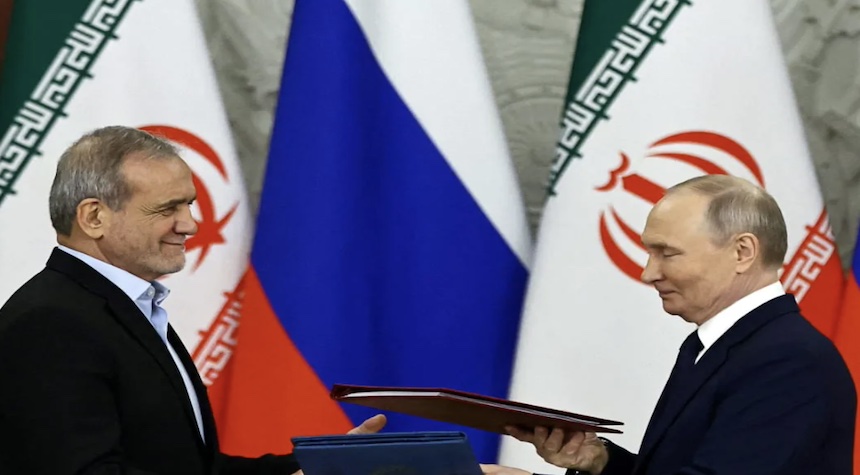
Russia has entered into a contract with Iran to construct eight nuclear power plants, four of which will be established in Bushehr, a region in the southern segment of Iran. This news was confirmed by the head of the Atomic Energy Organization, reports indicate.
According to Ebrahim Rezaei, the spokesman for the Iranian Parliament’s National Security and Foreign Policy Commission, the Iranian people are in favor of boosting the nuclear industry, viewing it as a secure path for the nation’s future. This was reported by The Iran Press.
The commission members paid a visit to the nuclear reactor in Tehran recently, as well as the radiopharmaceutical production complex operated by the Atomic Energy Organization.
Mohammad Eslami, Iran’s atomic energy chief, confirmed the expansion during their tour, as reported by the Israeli National News. What’s more, this development was also disclosed by the official Iranian news agency, IRNA, indicating a significant expansion of Iran’s civilian nuclear energy program.

According to reliable sources, Eslami, who heads the Atomic Energy Organization of Iran (AEOI), verified that four out of the eight expected reactors will be situated in Bushehr, the location of the nation’s only operating nuclear power facility.
He continued to provide the lawmakers with updates on the ongoing construction of units 2 and 3 at the existing Bushehr plant, stating that these units are being developed by Iranian companies.
The Bushehr plant was activated in the port city in 2011 with Russia’s assistance, alongside several underground nuclear operations. Since then, Iran and Russia have initiated a new phase of construction for a second reactor at Bushehr in 2019.
Meanwhile, Iran began construction of a new nuclear power plant in the nation’s southwest in 2022, and it was projected that the 300-megawatt Karoon plant would be completed in eight years for $2 billion.

This development follows earlier reports that Iran began construction last year on four additional nuclear power plants in the country’s south, with an estimated total capacity of 5,000 megawatts.
The news of the new Russian-financed plants comes at a time when Western nations are pushing this week for a resolution from the International Atomic Energy Agency’s Board of Governors to censure Iran for not complying with inspectors.
Should no agreement be reached with Washington, Iran could face “snapback,” or the reimposition of United Nations sanctions that were lifted in the 2015 nuclear deal with world powers, which was negotiated under then-President Barack Obama. The deal permitted Iran to enrich uranium to 3.67%, which is sufficient to fuel nuclear power plants but below the 90% threshold for weapons-grade uranium.
However, it has been reported that Iran now allegedly enriches uranium up to 60% and possesses a stockpile that could allow it to construct multiple nuclear bombs, even though it maintains that its nuclear program is solely for peaceful purposes.