

House Republicans are poised to vote on a sweeping $4.5 trillion tax and spending bill in the early hours of Thursday morning. This legislation, championed by President Donald Trump, represents a significant effort to reshape American fiscal policy before the Fourth of July deadline.
House Speaker Mike Johnson has expressed confidence in meeting the holiday target, following a narrow approval in the Senate. “Our way is to plow through and get it done,” Johnson stated after a series of late-night meetings.
The bill, spanning over 800 pages, encompasses a broad range of Republican priorities. At its core are $4.5 trillion in tax breaks, including extensions of cuts enacted in 2017 and new deductions for workers and older adults. The package also allocates $350 billion for national security measures and immigration enforcement.
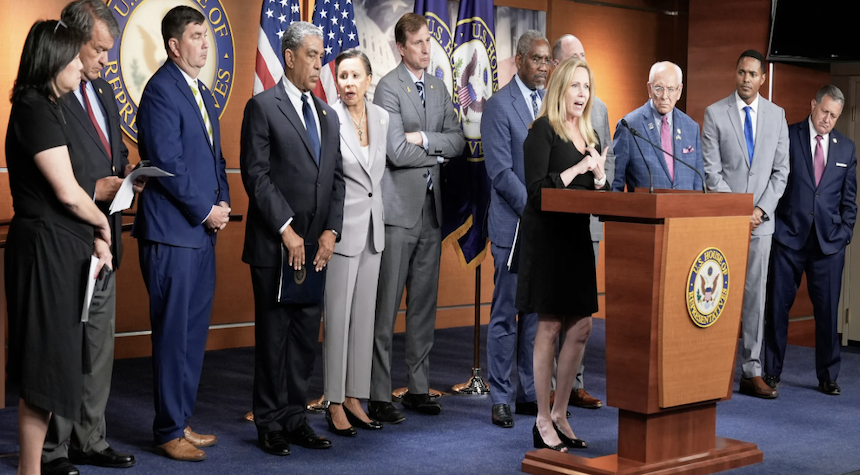
We should note that the legislation proposes $1.2 trillion in cutbacks to programs such as Medicaid and food stamps, primarily through new work requirements. The nonpartisan Congressional Budget Office reports that these changes could result in 11.8 million more Americans without health coverage and add $3.3 trillion to the deficit over a decade.
Republican supporters, like Representative Jodey Arrington of Texas, describe the bill as “a generational opportunity” for conservative reform. In contrast, Democrats, led by Representative Hakeem Jeffries, characterize it as “trickle-down cruelty” that benefits the wealthy at the expense of vulnerable populations.
The significance becomes clear when we consider the political landscape. With a slim 220-212 majority in the House, Republicans have little room for dissent. President Trump has been actively involved, reportedly contacting hesitant lawmakers and threatening to campaign against defectors.

This development follows earlier reports of internal Republican disagreements. Moderate members have expressed concerns about cuts to healthcare and renewable energy projects, while conservatives pushed for deeper reductions. The White House has been working to address these concerns through potential executive actions and district-specific provisions.
The evidence suggests that this bill, if passed, would mark a significant shift in domestic policy. It would roll back elements of both the Obama-era Affordable Care Act and the Biden administration’s climate initiatives. The Tax Policy Center projects that the tax changes would primarily benefit higher-income Americans, with the top quintile receiving an average cut of $10,950 compared to $150 for the lowest quintile.
As the situation continues to develop, important questions remain about the long-term economic and social impacts of these proposed changes. This is a story that will likely have far-reaching consequences for Americans across the economic spectrum.