
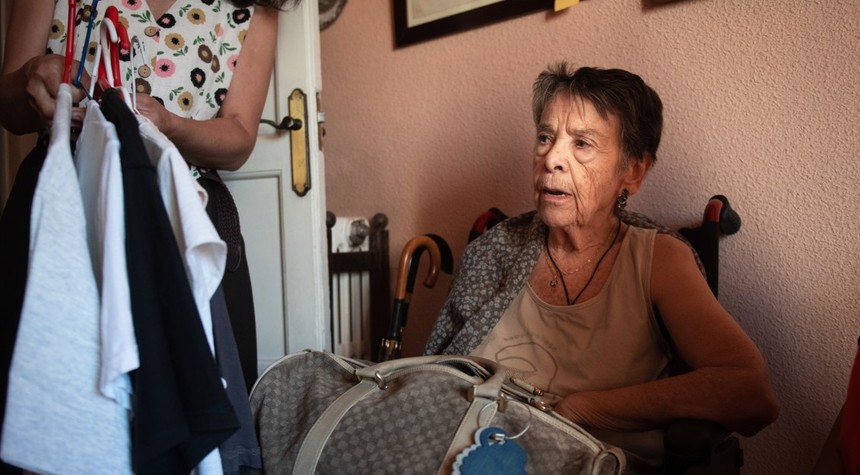
And that’s the way it is in Madrid this week, where an 87-year-old woman’s forced removal from her home of more than seven decades has laid bare a housing crisis that threatens the social fabric of Spain’s major cities.
Maricarmen Abascal, confined to a wheelchair, was carried from her apartment in Madrid’s Retiro neighborhood on a stretcher Wednesday morning and transported by ambulance as hundreds of supporters looked on. The scene was one of considerable tumult, with dozens of police officers forming barriers to hold back protesters who sought to prevent the eviction from proceeding.
The facts of the case are these: An investment fund known as Urbagestión acquired Abascal’s building in 2018 and promptly sought a substantial increase in her rent. For more than five years, this elderly woman fought through the courts to remain in the only home she has known for most of her life.
Her attorney, Beatriz Duro, has characterized the force employed in Wednesday’s eviction as excessive and has criticized the building’s owners for their unwillingness to negotiate. According to Duro, an anonymous benefactor came forward offering to cover the rent payments entirely. The landlord refused to sign a new lease. Representatives of the investment fund declined to suspend the eviction despite pending court filings, humanitarian appeals, and evidence that public authorities were actively working to secure alternative housing for Abascal.
“We’ve been trying to negotiate with the landlords right up until the last moment, and they’ve flatly refused everything,” Duro stated, pointing to what she described as a fundamental lack of humanity in her client’s treatment.
The day before her removal, Abascal herself spoke plainly about her situation in a television interview. “It’s as if I’m living with a machete at the back of my neck, ready to be chopped off at any moment,” she said of the building’s owners. “They’re all inhumane.”
This case has become a focal point for broader discontent. Tenants unions and housing advocacy groups held protests Thursday in sixteen Spanish cities, including Granada, Logroño, and Zaragoza. Another major demonstration is planned for Madrid this Saturday evening.
The housing crisis gripping Spain’s urban centers stems from multiple factors. Gentrification has driven rents to unprecedented heights while the supply of affordable housing has diminished considerably. In Barcelona, the situation has been compounded by what locals describe as overtourism, with a surge in short-term vacation rentals reducing the stock of housing available to permanent residents.
The European Union has taken notice. Earlier this month, new regulations were announced aimed at addressing the housing shortage caused by short-term rentals in popular tourist destinations across the continent.
Spanish Prime Minister Pedro Sánchez, speaking at the United Nations General Assembly, called the eviction “a social tragedy that we cannot accept either as a country or, of course, from the perspective of public institutions.”
The investment fund at the center of this controversy, Urbagestión, has not responded to requests for comment.
What remains clear is this: the forces of capital and the needs of ordinary citizens are colliding in Spain’s cities, and the outcome of that collision will determine whether communities can maintain their character and their people in an age of investment funds and global tourism. For Maricarmen Abascal, that collision has already resulted in displacement from the home where she spent seven decades of her life.
Related: Estonia Sees No Evidence Russia Preparing Full-Scale NATO Invasion