
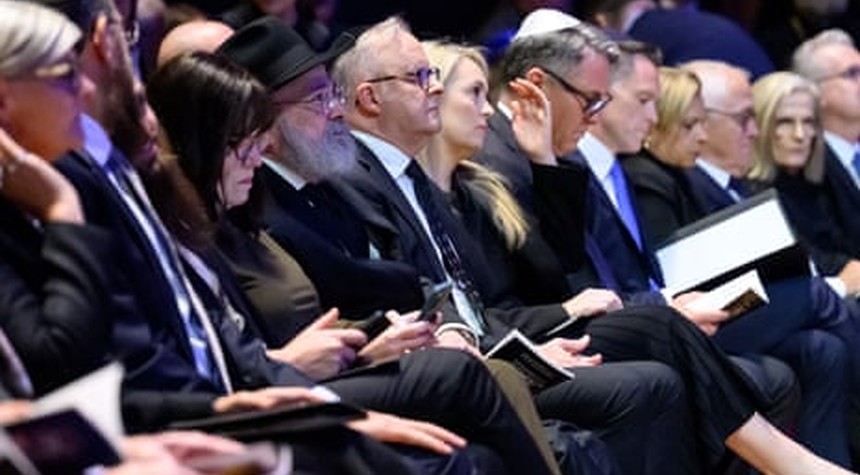
At precisely 7:01 on Thursday evening, 1,500 mourners gathered inside the Sydney Opera House fell into profound silence. Television broadcasts ceased. Public gatherings stilled. Across Australia, a nation paused to remember 15 lives lost to terror.
Six weeks have passed since gunmen attacked worshippers celebrating the first night of Hanukah at a Bondi synagogue, marking the deadliest terror attack on Australian soil. The passage of time has not diminished the weight of this tragedy, nor has it answered all the questions that linger in its wake.
The national day of mourning centered on a memorial service at the iconic Opera House, where the local Chabad of Bondi chose a theme of resilience: “Light Will Win.” Outside the venue, Orthodox Jewish mourners offered tefillin to passersby, continuing the traditions that the attackers sought to extinguish. Inside, on a stage typically reserved for artistic performance, family members and survivors lit 15 candles, each representing a life cut short.
Among those lighting candles was Larisa Kleytman, whose 87-year-old husband Alex survived the Holocaust only to fall to terrorist bullets three years before their 60th wedding anniversary. Valentyna Poltavchencko honored her daughter Matilda, just 10 years old and the youngest victim of the massacre. Ahmed al-Ahmed, the Syrian-born father who helped disarm one of the gunmen during the attack, lit a candle for Sofia Gurman, who died alongside her husband Boris as they attempted to stop the shooters.
In a moment of particular poignancy, 20-year-old pianist Leibel Lazaroff performed publicly for the first time since the attack, appearing on stage just hours after his discharge from hospital. His presence offered living testimony to survival and the determination to carry forward.
The heavy security presence surrounding the memorial underscored the ongoing threat. Heavily armed police officers, snipers positioned on the Opera House roof, and circling helicopters served as stark reminders that Sydney remains on heightened alert. The nation’s security apparatus has been forced to reckon with vulnerabilities previously considered remote possibilities.
At Bondi Beach itself, tourists and residents have gradually returned to normal routines, yet the attack’s shadow persists. Debates continue over the fate of the heritage-listed pedestrian footbridge the gunmen used to approach their targets. In Archer Park, a menorah stands as a temporary memorial, a symbol both of remembrance and of the Jewish community’s refusal to retreat from public life.
Thursday afternoon brought mourners back to the Bondi Pavilion, where thousands had laid bouquets in the attack’s immediate aftermath. Those flowers, three tonnes in total, have been removed for preservation and transformation into a permanent memorial artwork. Following Jewish tradition, mourners placed stones of remembrance instead.
Australians have been encouraged to perform mitzvah, small acts of kindness, in honor of the victims. This call to action represents more than sentiment. It reflects a determination that goodness must answer evil, that community must respond to those who would tear it apart.
The attack has forced Australia to confront uncomfortable realities about domestic security and the international reach of violent extremism. For a nation that has long prided itself on relative safety and social cohesion, the Bondi massacre represents a profound challenge to national identity.
As the minute of silence concluded and life resumed its rhythms, the question facing Australia remains clear: how does a free society protect its citizens while preserving the openness that defines it? The answer, as the memorial’s theme suggested, may lie not in retreating from public life but in ensuring that light, indeed, wins.
Related: Prince Harry Leads Celebrity Group in Legal Battle Against Daily Mail Publisher