
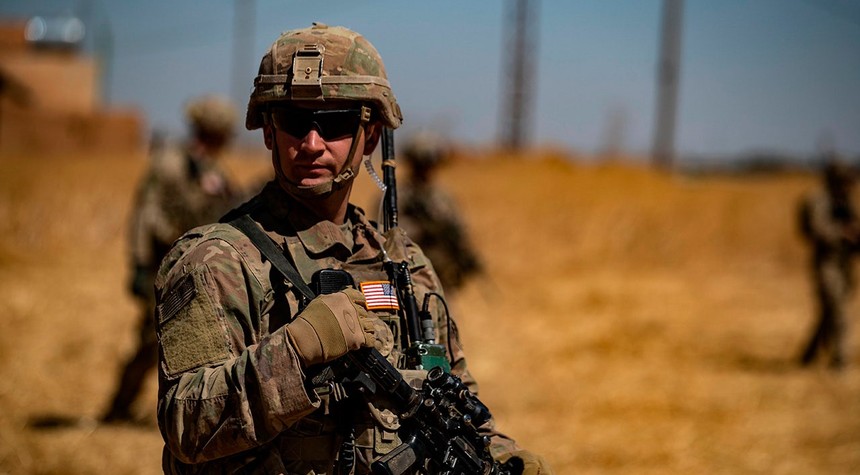
The deaths of two American service members in Syria last weekend have thrust the Trump administration’s Middle East strategy into sharp relief, raising fundamental questions about the reliability of Syria’s newly formed government and the enduring threat posed by the Islamic State.
The facts are these: An armed member of Syria’s post-Assad security forces opened fire on American personnel, killing two soldiers and an interpreter before being shot dead himself. Syrian officials have confirmed that the gunman had been flagged internally for extremist sympathies and was reportedly in the process of being reassigned when he carried out the attack. The gunman is believed to have had ties to ISIS.
This incident has become more than a tragic loss of American lives. It has exposed what may be a critical vulnerability in the administration’s approach to Syria, particularly its decision to work closely with Ahmed al-Sharaa, the country’s new leader who until recently was designated as a terrorist by the United States government.
The administration’s position is that al-Sharaa represents the best hope for stability in Syria following the collapse of Bashar al-Assad’s regime. Officials argue that cooperation with Syria’s new government is essential to preventing ISIS from regaining the territory it once controlled across the region. The president himself has scheduled a historic White House meeting with al-Sharaa as part of a broader push for regional peace.
Yet the weekend attack has given critics substantial ammunition. The question now being asked in Washington is whether the administration is placing too much faith in institutions that remain penetrated by extremist elements and fundamentally unreliable as partners in counterterrorism operations.
Senator Jim Banks of Indiana, a Republican member of the Armed Services Committee, has defended the president’s approach. He maintains that the administration successfully dismantled the ISIS caliphate during the first term and will do so again. The senator’s confidence reflects a broader view among some Republicans that decisive action, rather than prolonged military presence, represents the proper course.
Senator Jack Reed of Rhode Island, the ranking Democrat on the Armed Services Committee, has offered a starkly different assessment. He notes that American intelligence agencies continue to identify ISIS as the most capable and dangerous Islamic terrorist organization, one that has demonstrated both the intent and capability to strike within the United States itself. Reed argues that claims of ISIS’s defeat are premature and potentially dangerous.
The debate has revealed a fundamental split not only between parties but within the Republican coalition itself. Some conservatives argue that the attack demonstrates precisely why American forces should withdraw from what they view as an increasingly untenable position. Others contend that departure would create the very vacuum that allowed ISIS to flourish in the first place.
What remains beyond dispute is that American forces continue to face threats from multiple directions in Syria. The insider attack suggests that the danger comes not only from ISIS remnants operating in the shadows but potentially from within the very security forces the United States is attempting to support and strengthen.
The administration now faces difficult choices. It must balance legitimate concerns about the reliability of Syrian security forces against the strategic imperative of preventing ISIS resurgence. It must weigh domestic political pressure for withdrawal against military assessments of what American departure might unleash.
These are not simple questions, and they will not yield to simple answers. What is certain is that two American soldiers have paid the ultimate price, and their deaths demand a clear-eyed reassessment of both risks and objectives in a region that continues to challenge American strategy and resolve.
Related: Trump Administration Announces Record $11 Billion Arms Package for Taiwan