
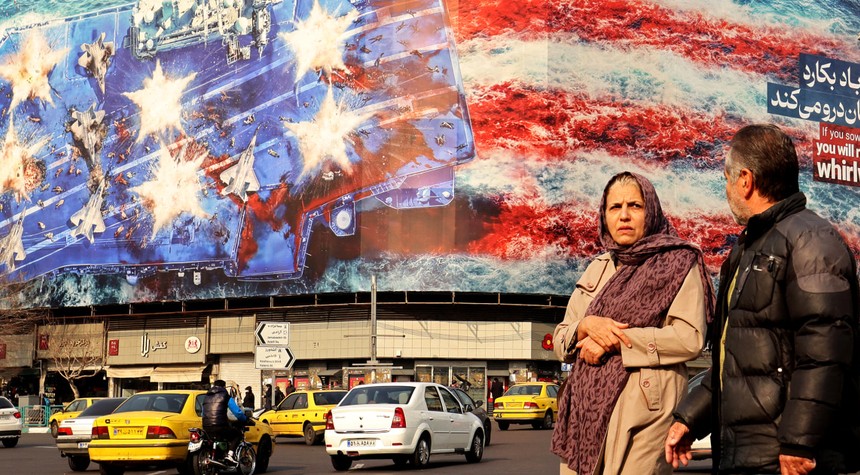
President Donald Trump delivered a stark warning to Iran on Wednesday, declaring that time is running short for the Islamic Republic to negotiate over its nuclear weapons program as a substantial American naval force arrives in the region.
The President stated that an American fleet, headed by the aircraft carrier USS Abraham Lincoln, has been positioned in the Middle East with clear purpose. According to a U.S. official, the Lincoln and its accompanying vessels arrived Monday. Trump characterized this deployment as larger than the naval force recently dispatched to Venezuelan waters, where American ships enforced sanctions against oil tanker movements.
“Like with Venezuela, it is ready, willing, and able to rapidly fulfill its mission, with speed and violence, if necessary,” the President stated, emphasizing the fleet’s operational readiness.
This military positioning follows weeks of civil unrest in Iran that has resulted in significant loss of life. The U.S.-based Human Rights Activists News Agency reported Tuesday that more than 6,000 people have been killed in demonstrations across Iran, including in the capital city of Tehran. The organization maintains that it verifies each death through a network of activists operating within Iran and subjects its data to rigorous internal verification processes. Iran’s government has placed the official death toll at 3,117. Independent verification of either figure remains impossible.
The Iranian government has rejected Trump’s assertions that American pressure prevented the execution of more than 800 protesters, calling such claims entirely false. The President had previously indicated that mass executions would constitute grounds for military intervention, though his Wednesday statement made no reference to the ongoing protests.
Instead, Trump focused his message on nuclear negotiations, stating that “time is running out” for Tehran to pursue diplomatic resolution. He called for Iran to negotiate what he termed “a fair and equitable deal” that would prohibit nuclear weapons development and serve the interests of all parties involved.
The President also referenced last summer’s American bombing campaign against Iranian nuclear facilities, warning that any future military action would prove “far worse” than those strikes. “Don’t make that happen again,” he cautioned.
This latest development represents a continuation of Trump’s hardline approach toward Iran, which began during his first term when he withdrew the United States from the multilateral nuclear agreement with Tehran. That decision reversed years of diplomatic effort aimed at constraining Iran’s nuclear ambitions through international cooperation and verification protocols.
The current situation places American military assets in close proximity to Iranian territory at a moment of significant internal instability within the Islamic Republic. The combination of domestic unrest and external military pressure creates a complex diplomatic and security challenge for both nations.
The deployment of the Abraham Lincoln carrier strike group represents substantial American military capability in the region, capable of projecting power across a wide area. Such deployments traditionally serve both as deterrent forces and as preparation for potential military operations should diplomatic efforts fail.
As this situation develops, the international community watches closely to see whether Iran will respond to American pressure with renewed negotiations or whether the current standoff will escalate further.
Related: Final Israeli Hostage Returns from Gaza as Trump Declares Phase Two Must Begin