
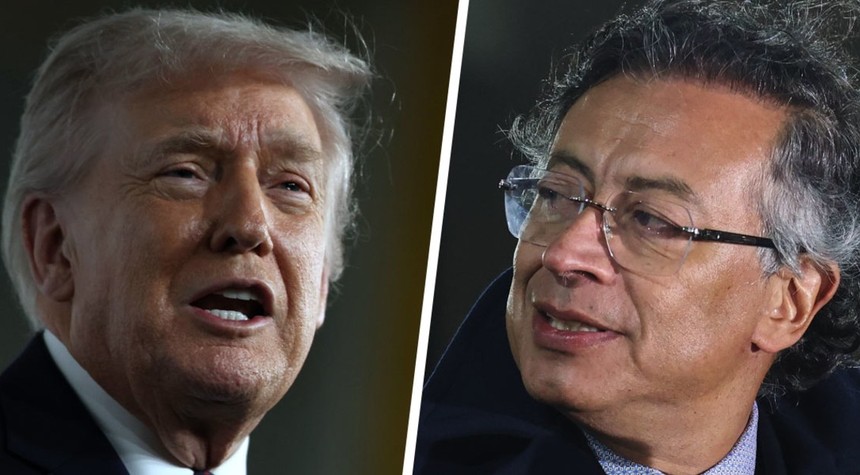
The White House played host Tuesday to a meeting that, by any measure, represents a significant test of American diplomacy in South America. President Donald Trump welcomed Colombian President Gustavo Petro for their first face-to-face discussion since months of public discord strained what has historically been one of America’s most reliable partnerships in the hemisphere.
The timing of this meeting carries considerable weight. It marks the first occasion President Trump has sat down with a South American head of state since American forces captured Venezuelan strongman Nicolás Maduro just one month ago, an operation that sent shockwaves through the region and became a flashpoint in U.S.-Colombian relations.
The agenda for Tuesday’s bilateral talks encompasses Venezuela’s shared border with Colombia, energy cooperation, and assurances regarding the integrity of Colombia’s upcoming presidential elections. The narcotics trade, which has long been central to U.S.-Colombian cooperation, will also feature prominently in discussions.
Speaking to reporters Monday, President Trump acknowledged the rocky path that led to this meeting. He noted that while tremendous amounts of drugs originate from Colombia, President Petro “has been very nice over the last month or two.” The American president observed pointedly that Petro “was certainly critical before that, but somehow, after the Venezuelan raid, he became very nice.”
Indeed, the relationship between these two leaders has been nothing short of volatile. Petro, a former Marxist revolutionary now serving his final months in office before term limits force his departure in August, has publicly challenged several key American actions in the region. He characterized Maduro’s capture as a violation of regional sovereignty and used the term “kidnapping” to describe the operation. He protested American strikes on alleged drug boats in the eastern Pacific and Caribbean, and objected to the deportation of Colombian nationals from the United States.
President Trump responded to these criticisms with characteristic directness, at one point suggesting a U.S. military operation in Colombia “sounds good” and calling Petro a “sick man” who should exercise caution. These sharp exchanges sparked nationwide demonstrations in Colombia, where anti-American sentiment flared in support of the Colombian president.
The diplomatic temperature has cooled somewhat in recent weeks. Senator Rand Paul of Kentucky helped facilitate a telephone conversation between the two presidents in late January, which both leaders subsequently described in positive terms and led directly to Tuesday’s White House invitation.
Colombia’s Foreign Minister Rosa Villavicencio expressed optimism Monday about the meeting’s prospects. However, some former officials have voiced concern about bringing together two leaders known for unpredictable and fiery temperaments.
The stakes extend beyond personal chemistry. The United States and Colombia have maintained a strong alliance for decades, built on mutual interests in combating narcotics trafficking and promoting regional stability. Members of Congress have worked to preserve this partnership even as the executive branches clashed.
That alliance faced its own test last October when President Trump sanctioned President Petro, members of his family, and a Cabinet official over allegations of involvement in the global drug trade. Petro has categorically denied these accusations and vowed to clear his name.
As these two leaders meet, the future of American engagement in South America hangs in the balance. The outcome of Tuesday’s discussions may well determine whether the United States and Colombia can restore the cooperative relationship that has served both nations’ interests, or whether the wounds of recent months will prove too deep to heal before Colombia’s presidential transition in August.
Related: Trump Signals Hope for Iran Negotiations as Military Assets Deploy to Region