
President Donald Trump issued a stark warning to the United Kingdom regarding its pursuit of closer economic ties with China, creating immediate diplomatic friction just hours after British Prime Minister Keir Starmer concluded what he characterized as productive talks with Chinese President Xi Jinping in Beijing.
The American president’s assessment was unambiguous. When questioned about Starmer’s attempts to reset economic relations with China, Trump stated it was “very dangerous” for Britain to pursue such a course with the rival superpower.
The timing of Trump’s remarks carries particular significance. Starmer had just completed three hours of discussions with Xi at the Great Hall of the People in Beijing, marking the first visit by a British prime minister to China in eight years. During those meetings, the prime minister secured improved market access, reduced tariffs, and various investment agreements that he promised would benefit British workers and businesses.
The British leader defended his approach with measured resolve. Speaking to reporters, Starmer argued that ignoring China was not a viable strategy for the United Kingdom. He pointed to economic realities that cannot be dismissed by diplomatic preferences alone. China stands as the world’s second-largest economy and, when combined with Hong Kong, represents Britain’s third-largest trading partner.
“I don’t think it’s wise for the United Kingdom to stick its head in the sand,” Starmer stated, emphasizing that his Beijing visit had opened opportunities for job creation and wealth generation back home.
British Trade Minister Chris Bryant went further, directly contradicting the American president’s assessment. Bryant noted an apparent inconsistency in Trump’s position, pointing out that the president himself has claimed friendship with Xi and plans to visit China in April.
The diplomatic tension reveals deeper currents in international relations. Starmer’s visit to Beijing places him among several Western leaders who have recently traveled to China, seeking to build economic ties with the world’s second-largest economy while simultaneously hedging against what many view as an increasingly unpredictable American administration.
Trump’s recent behavior has indeed rattled traditional American allies. His fluctuating threats of trade tariffs and provocative statements about seizing control of Greenland, an autonomous Danish territory, have created uncertainty among nations that have long relied on American partnership and predictability.
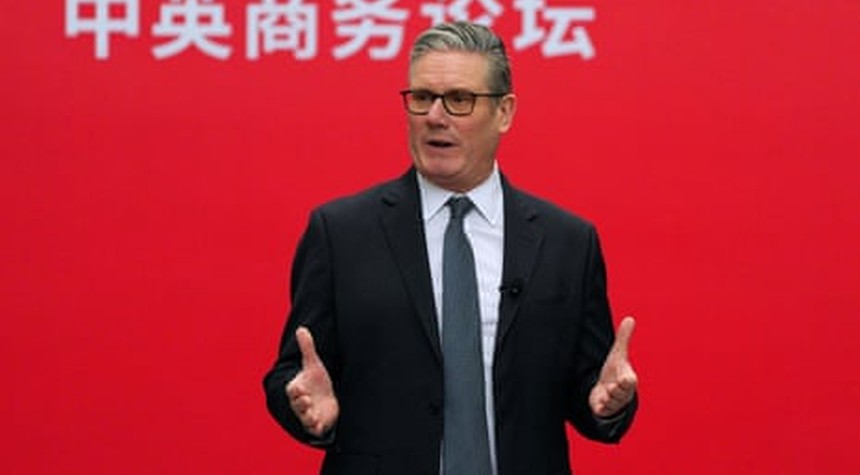
At the UK-China Business Forum in Beijing, Starmer characterized the bilateral relationship as being in a “good, strong place.” He described his engagement with Chinese officials as achieving “just the level of engagement that we hoped for,” noting that Britain “has got a huge amount to offer.”
British business leaders in China welcomed the prime minister’s visit. Chris Torrens, chair of the British Chamber of Commerce in China, called the trip “successful” and defended the logic of Britain seeking stronger ties with one of its larger trading partners.
Following his Beijing meetings, Starmer traveled to Shanghai before departing for Tokyo, where he was scheduled to meet Japanese Prime Minister Sanae Takaichi for a working dinner, continuing his Asian diplomatic tour.
British officials indicated that Washington had been informed of the trip and its objectives in advance, though this advance notice did little to temper Trump’s public criticism.
The episode underscores the complex position facing American allies as they navigate between economic pragmatism and strategic alignment. For Britain, the calculus involves balancing its historic partnership with the United States against the economic opportunities presented by engagement with China, all while managing the unpredictability that has come to characterize the current American administration’s foreign policy approach.
Related: Alberta Separatists Meet With Trump Administration Officials in Washington