
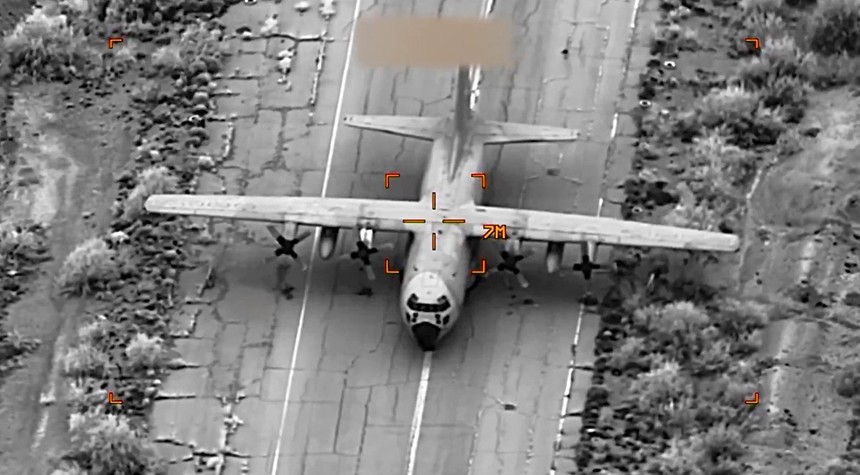
The United States military campaign against Iran entered another phase this week as American forces conducted systematic strikes against Iranian aircraft positioned on the ground, according to footage released by U.S. Central Command.
The video documentation, made public late Wednesday, shows the methodical destruction of Iranian air assets as part of what military officials describe as an ongoing effort to dismantle the Islamic Republic’s military infrastructure. The strikes represent a continuation of American military operations that have maintained pressure on Iranian forces across multiple fronts.
“The Iranian regime is losing air capability day by day,” Central Command stated in its release of the footage. The command emphasized that American forces have moved beyond a purely defensive posture, now actively working to dismantle Iranian military capabilities in a systematic fashion.
The release of this footage comes at a critical juncture in the conflict. American forces have maintained what military officials describe as air superiority over substantial portions of Iranian territory, a claim that has become a point of contention between Washington and Tehran.
Iranian military leadership attempted to counter the American narrative Wednesday, with an Islamic Revolutionary Guard Corps official claiming that Iranian forces had successfully shot down an American F-15 fighter aircraft south of Tehran. U.S. Central Command responded swiftly and unequivocally to these assertions.
“An IRGC leader has claimed that a U.S. F-15 was shot down today south of Tehran. Lie,” the command stated flatly. The response continued with an emphatic assertion: “No U.S. fighter aircraft have been shot down by Iran. U.S. forces continue to exercise air superiority over vast swaths of Iran. Truth.”
The exchange highlights the information warfare component of this military engagement, with both sides seeking to shape public perception of the conflict’s trajectory. For the American military, maintaining the narrative of air superiority serves both operational and strategic purposes, reassuring allies while potentially undermining Iranian morale.
The broader context of these operations remains significant for American strategic interests in the region. The systematic degradation of Iranian air capabilities represents a substantial shift in the military balance of power, potentially affecting Tehran’s ability to project force beyond its borders and to defend against further strikes.
As these operations continue, questions about the ultimate objectives and endgame of the campaign persist. The methodical nature of the strikes suggests a long-term strategy aimed at fundamentally altering Iran’s military posture rather than achieving specific tactical objectives.
The American people and their representatives will undoubtedly continue to scrutinize these operations as they develop, weighing the strategic necessity against the costs and risks inherent in sustained military engagement. What remains clear is that American military forces have established and maintained a dominant position in the skies over Iran, a fact that will likely shape the course of this conflict in the days and weeks ahead.
And that is the situation as it stands this evening.
Related: Iranian Drone Strike in Kuwait Leaves Dozens of American Service Members Wounded