
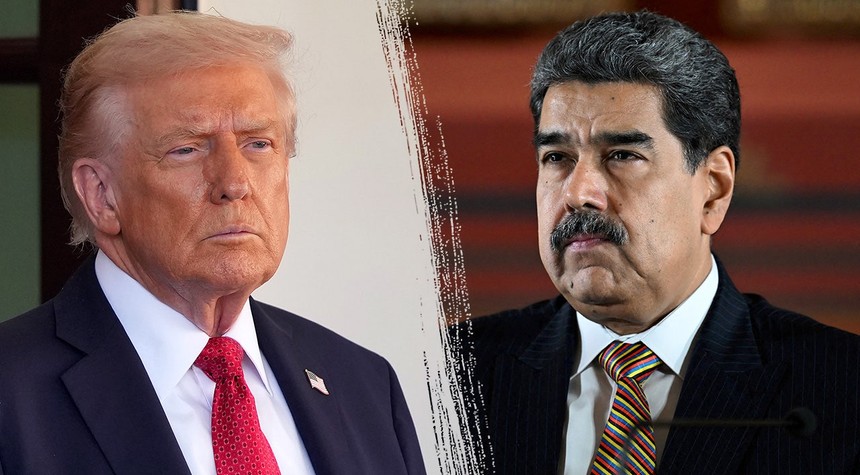
President Donald Trump confirmed Sunday that he spoke by telephone with Venezuelan President Nicolás Maduro, though he declined to characterize the substance of their conversation beyond stating simply, “It was a phone call.”
Speaking to reporters aboard Air Force One, the president described Venezuela as “not a very friendly country” and repeated his administration’s long-standing accusation that the South American nation has permitted criminals, gang members, and drug traffickers to enter the United States.
The president’s remarks followed his Saturday declaration that the airspace above and surrounding Venezuela should be considered “closed in its entirety,” a warning directed at airlines, pilots, and those involved in drug and human trafficking operations. When pressed by reporters whether this warning signaled an imminent military strike, Trump urged caution in interpretation. “Don’t read anything into it,” he said.
The exchange represents the latest development in steadily escalating tensions between Washington and Caracas over Venezuela’s role in the narcotics trade affecting American communities. Since September, the Trump administration has conducted more than twenty strikes against suspected drug vessels in Latin American waters, resulting in over eighty-two suspected narco-terrorists eliminated, with three survivors.
These operations have been accompanied by a significant increase in American military presence throughout the Caribbean region, part of a broader administration effort to interdict the flow of illegal drugs into the United States. The strikes have targeted vessels linked to various criminal organizations, including Colombia’s National Liberation Army, known by its Spanish acronym ELN.
Venezuelan President Maduro has responded to American actions with a mixture of defiance and calls for peaceful resolution. In an address to supporters in Caracas last week, Maduro appeared brandishing a ceremonial sword said to have belonged to Simón Bolívar, the nineteenth-century independence leader who liberated much of South America from Spanish colonial rule. Maduro warned his supporters to prepare for confrontation, predicting that the United States would “very soon” begin stopping suspected Venezuelan drug traffickers on land, not merely at sea.
Maduro has characterized American military operations in the region as “imperialist aggression,” employing rhetoric reminiscent of Cold War-era confrontations between the United States and leftist Latin American governments.
The situation presents complex challenges for American foreign policy. Venezuela sits atop the world’s largest proven oil reserves, yet its economy has collapsed under socialist governance, sending millions of refugees fleeing to neighboring countries and, ultimately, toward the United States border. The Maduro regime has maintained power despite international pressure, including American sanctions and diplomatic isolation.
The drug trafficking issue has become particularly acute as Venezuelan territory and territorial waters have increasingly served as transit points for narcotics produced in Colombia and destined for American markets. The breakdown of Venezuelan state capacity has created what security analysts describe as ungoverned spaces where criminal organizations operate with impunity.
Whether the current tensions will escalate beyond the naval interdiction operations already underway remains uncertain. The president’s airspace declaration and his refusal to elaborate on his conversation with Maduro leave considerable ambiguity about American intentions in the region.
Related: Australian Nationals Leader Littleproud Addresses Joyce Departure from Party