
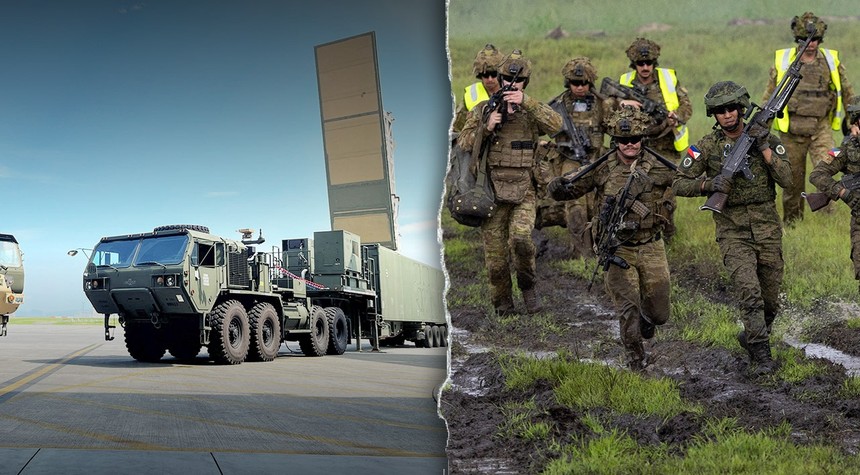
The United States is moving forward with plans to significantly expand its deployment of advanced missile systems to the northern Philippines, a strategic positioning that places critical Chinese military installations within striking distance and marks a substantial escalation in Washington’s efforts to counter Beijing’s increasingly aggressive posture throughout the Indo-Pacific region.
American and Philippine officials jointly announced the expansion, which will include what they termed “cutting-edge missile and unmanned systems” deployed to the treaty ally. The announcement came alongside a strongly worded condemnation of what both governments characterized as China’s “illegal, coercive, aggressive and deceptive activities” throughout the contested waters of the South China Sea.
This development represents more than routine military cooperation. It signals a fundamental shift in the strategic balance of power across one of the world’s most volatile regions, where American interests and Chinese ambitions increasingly collide.
The expanded deployment builds upon the positioning of the U.S. Army’s Typhon missile system in northern Luzon earlier this year. The Typhon represents a formidable ground-based launcher capable of firing Tomahawk cruise missiles, weapons systems with a range exceeding one thousand miles. From their current positions in northern Luzon, these missiles can reach portions of southern China and major facilities operated by the People’s Liberation Army.
The strategic geography cannot be understated. This positioning provides American and Philippine forces with coverage over vast expanses of the South China Sea and the critical maritime corridors that connect these waters to the broader Pacific Ocean. These are the very sea lanes through which trillions of dollars in global commerce flow annually, and which Beijing has sought to dominate through its expansive territorial claims and military buildup.
The timing of this announcement carries particular significance. Confrontations between Chinese and Philippine vessels in disputed waters have grown more frequent and more dangerous in recent months. Simultaneously, Beijing has maintained relentless pressure on Taiwan, conducting military exercises and making increasingly bellicose statements about reunification. These twin flashpoints represent the most dangerous potential triggers for broader conflict in the region.
The implications extend well beyond bilateral relations between Washington and Beijing. America’s treaty allies throughout the region are watching closely, measuring Washington’s commitment to maintaining the balance of power that has underwritten regional stability and prosperity for decades. The Philippines, having experienced firsthand China’s territorial assertiveness, has welcomed the enhanced American military presence as essential to its own defense.
For the United States, this deployment represents a concrete manifestation of the strategic pivot to Asia that has been discussed in policy circles for years but has often struggled for implementation. It demonstrates that Washington recognizes the Indo-Pacific as the critical theater where the contest for global influence will be decided in the coming decades.
The question now is how Beijing will respond to this unmistakable challenge to its regional ambitions. The American commitment, backed by advanced weaponry and treaty obligations, has been made clear. What remains uncertain is whether this show of strength will deter Chinese aggression or provoke a dangerous escalation in an already tense region.
Related: United States Sends 100 Troops to Nigeria Amid Growing Islamist Threat