
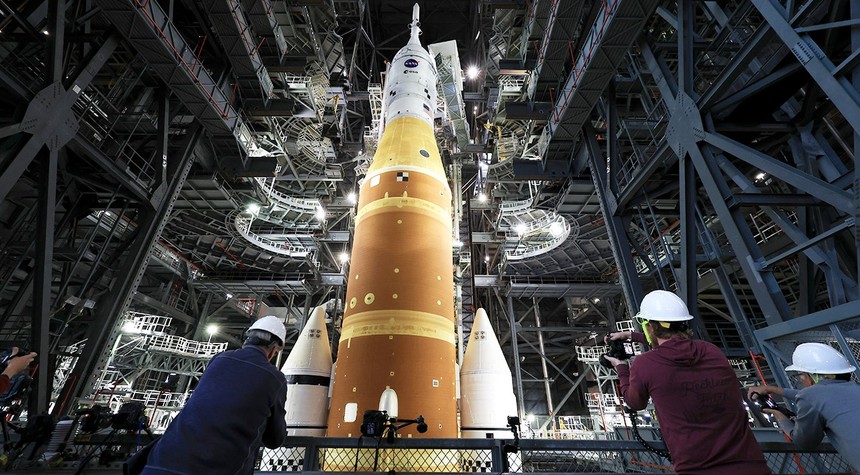
For the first time in more than half a century, the United States stands ready to send astronauts beyond the familiar confines of low Earth orbit, resuming a chapter of exploration that once defined American achievement and technological supremacy.
The Artemis II mission, scheduled to launch from Kennedy Space Center in Cape Canaveral, Florida, will carry four astronauts on a ten-day journey around the Moon. This represents not merely a symbolic return to deep space, but a comprehensive test of the systems and capabilities that will determine America’s role in the next generation of human spaceflight.
The mission profile is both ambitious and methodical. During their journey, the crew will conduct exhaustive tests of every critical spacecraft system. Navigation equipment, life support mechanisms, communications arrays, and propulsion systems will all undergo rigorous evaluation in the harsh environment beyond Earth’s protective magnetosphere. These are not academic exercises. The data gathered during Artemis II will directly inform the planning for subsequent missions that aim to return American astronauts to the lunar surface for the first time since the Apollo program concluded in 1972.
Retired NASA astronaut Captain Barry Wilmore, himself a veteran of space operations, has emphasized the significance of this undertaking. The mission represents a validation of years of engineering work, billions of dollars in investment, and a renewed national commitment to maintaining leadership in space exploration.
The broader implications extend well beyond the Moon. NASA officials have made clear that the Artemis program serves as a proving ground for eventual human missions to Mars. The technologies being tested, the operational procedures being refined, and the international partnerships being forged through Artemis will provide the foundation for humanity’s first journey to another planet.
This mission arrives at a moment when space has become an increasingly contested domain. Other nations, particularly China, have accelerated their own lunar programs with stated ambitions to establish permanent presence on the Moon. The strategic importance of space exploration has evolved considerably since the Cold War era, encompassing not only national prestige but also questions of resource utilization, scientific discovery, and long-term human expansion beyond Earth.
The Artemis II crew will venture farther from Earth than any humans have traveled in more than five decades, reclaiming a distinction that America has not held since the final Apollo missions. Their journey will test not only hardware and software, but also the nation’s resolve to maintain its position at the forefront of human achievement.
As the launch date approaches, the mission stands as a statement of intent. The United States does not merely participate in space exploration. It leads. Artemis II will demonstrate whether that leadership can be sustained in an era of renewed competition and expanded ambition among spacefaring nations.
The eyes of the world will turn skyward when those four astronauts depart Earth’s orbit, carrying with them the hopes of a nation that once planted its flag on another world and now seeks to do so again.
Related: Trump Tells Allies to Secure Their Own Oil as Strait of Hormuz Crisis Continues