
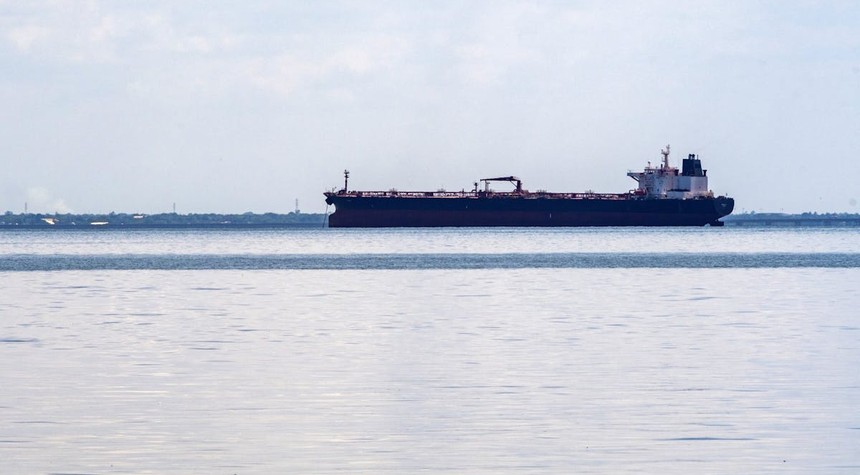
The United States Coast Guard is conducting a seizure operation against a vessel in international waters off the coast of Venezuela, according to three officials within the administration who spoke on condition of anonymity Saturday. This marks the second such interdiction in recent weeks and represents a significant escalation in American enforcement of sanctions against the Maduro regime.
The operation follows President Trump’s announcement earlier this week of what he termed a “total and complete blockade” of all sanctioned oil tankers conducting business with Venezuela. The Coast Guard has taken the lead in this latest interdiction, though officials declined to specify the exact location of the operation. Both the Pentagon and Coast Guard have directed inquiries to the White House, which has not yet issued a statement. Venezuelan authorities have similarly remained silent on the matter.
The facts on the ground tell a compelling story. Since American forces seized their first sanctioned tanker last week, Venezuelan crude exports have experienced a dramatic decline. Loaded vessels carrying millions of barrels of oil now remain anchored in Venezuelan territorial waters rather than risk interdiction and seizure by United States forces. The economic calculus for these operators has fundamentally changed.
This enforcement action occurs against the backdrop of a substantial American military presence in the region. The deployment signals Washington’s determination to make its sanctions regime effective rather than merely symbolic.
The situation presents a complex web of international commerce and legal jurisdictions. While many vessels loading oil in Venezuela operate under sanctions, others transporting Venezuelan crude alongside shipments from Iran and Russia have not been designated. American energy company Chevron continues to transport Venezuelan oil using its own authorized vessels, operating within the bounds of specific licenses granted by the Treasury Department.
China remains Venezuela’s largest crude oil customer, with Venezuelan shipments accounting for approximately four percent of Chinese imports. Industry analysts report that December shipments were tracking toward an average exceeding 600,000 barrels per day. For the moment, Beijing has ample supply, with millions of barrels aboard tankers waiting to offload at Chinese ports.
The broader implications for global energy markets bear watching. Current oil supplies remain adequate, providing a cushion against immediate disruption. However, if this embargo maintains its current effectiveness over an extended period, the removal of nearly one million barrels per day from global supply chains will likely exert upward pressure on crude prices.
The Trump administration’s approach represents a marked departure from previous enforcement patterns. Rather than relying solely on financial penalties and diplomatic pressure, the United States has now demonstrated its willingness to physically interdict vessels in international waters. This shift from passive sanctions to active enforcement fundamentally alters the risk assessment for any entity considering commerce with sanctioned Venezuelan oil.
The Venezuelan oil ministry and state company PDVSA have not responded to requests for comment, though their silence may reflect the limited options available to Caracas. The Maduro government finds itself increasingly isolated, with its primary revenue source now subject to direct American interdiction.
And that is the way it is this Saturday, as American naval forces reshape the economics of Venezuelan oil trade through determined enforcement of presidential directives.
Related: Man Who Tackled Hanukkah Event Shooter Receives Millions in Public Support