
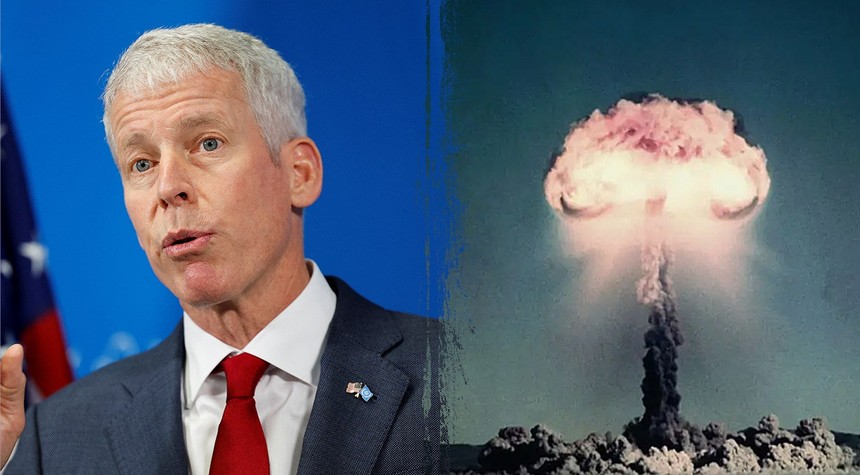
Energy Secretary Chris Wright has clarified that the United States will not conduct nuclear explosive tests, dispelling concerns that the Trump administration intended to break a three-decade moratorium on such activities.
In remarks made during a weekend briefing, Wright explained that planned testing would focus on weapons systems rather than nuclear detonations themselves. The tests, he noted, would be “noncritical explosions” examining components of nuclear weapons without triggering nuclear chain reactions.
“I think the tests we’re talking about right now are systems tests,” Wright stated. “These are not nuclear explosions. These are what we call noncritical explosions.”
The clarification comes after President Trump announced earlier that the United States would resume nuclear testing, citing similar activities by rival nations. The president made this announcement while traveling to meet with Chinese President Xi Jinping, though he did not initially specify whether he referred to explosive detonations or delivery system tests.
The distinction carries significant weight. The United States has not conducted a nuclear explosive test since 1992. Indeed, only North Korea has detonated a nuclear device in the past twenty-five years, conducting its most recent test in September 2017.
President Trump directed the Pentagon, which maintains responsibility for testing nuclear-capable delivery vehicles, to resume testing operations. The Energy Department retains jurisdiction over any testing of nuclear explosives themselves.
The president defended his decision by asserting that other nations continue testing activities. “We’ve halted it many years ago,” Trump said. “But with others doing testing, I think it is appropriate that we do also.”
In a weekend interview, the president claimed that Russia and China conduct secret nuclear weapons tests. “Russia’s testing nuclear weapons, and China’s testing them, too,” he stated. “You just don’t know about it.”
The intelligence community has not confirmed these assertions. China has not conducted a confirmed nuclear weapons test since 1996, though Pentagon assessments indicate Beijing is rapidly expanding its nuclear arsenal. The Defense Department projects China will possess nearly one thousand warheads by 2030.
Russia has not been verified to have tested a nuclear weapon since 1990. However, Moscow recently claimed successful tests of two delivery systems: an undersea torpedo designated Poseidon and a nuclear-powered cruise missile.
The international framework governing nuclear testing dates to 1996, when the United Nations adopted the Comprehensive Nuclear Test Ban Treaty. While the United States signed this treaty, the Senate never ratified it, leaving America in a peculiar legal position regarding such activities.
Wright’s clarification suggests the administration seeks to modernize nuclear weapons systems while avoiding the diplomatic and environmental consequences of actual nuclear detonations. Non-critical tests allow engineers to examine weapon components and delivery mechanisms without triggering nuclear fission or fusion reactions.
The announcement arrives amid broader concerns about nuclear modernization and the strain that artificial intelligence development places on American power generation capacity. The Energy Department faces the dual challenge of maintaining nuclear deterrence while expanding electrical grid capacity to meet surging demand from data centers and AI computing facilities.
These developments underscore the delicate balance the administration must strike between maintaining military readiness and adhering to international norms that have governed nuclear weapons for more than three decades.
Related: Ahmed al-Sharaa Plans First Official Syrian Presidential Trip to United States