
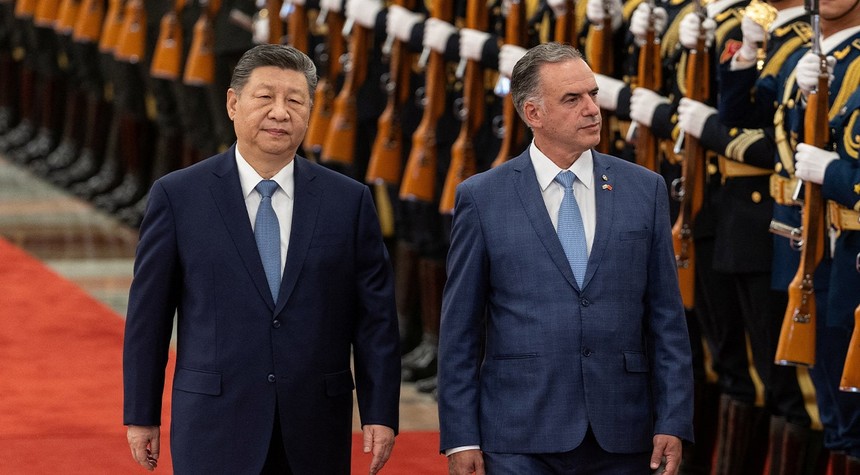
Uruguay has become the first South American nation to openly challenge the Trump administration’s hemispheric trade doctrine, with President Yamandú Orsi signing multiple strategic agreements with the Chinese Communist Party in Beijing this week.
Standing alongside Chinese President Xi Jinping in the Great Hall of the People on Tuesday, Orsi formalized what both leaders characterized as a deepening partnership between their nations. The move represents a significant test of what the Trump administration has termed the “Donroe Doctrine,” a policy framework aimed at limiting Chinese economic influence in Latin America and the Caribbean.
According to official reports from the meeting, Xi told the Uruguayan president that China and Uruguay should collaborate toward “an equal and orderly multipolar world and an inclusive, universally beneficial economic globalisation.” The Chinese leader emphasized his nation’s support for Latin American and Caribbean countries in maintaining their sovereignty and development interests, positioning Beijing as a counterweight to what he described as “escalating unilateral bullying” in international affairs.
President Orsi reciprocated the sentiment, declaring that relations between China and Uruguay were experiencing their “best moment” and expressing commitment to elevating the partnership to new heights. The Uruguayan delegation, numbering approximately 150 individuals and including prominent business leaders from the South American nation, will remain in Beijing and Shanghai through Saturday to finalize various commercial arrangements.
The timing and substance of these agreements merit careful attention. Uruguay, a nation of fewer than four million people, maintains one of the most stable democracies in South America and has traditionally balanced its relationships between Western powers and emerging markets. This deliberate pivot toward deeper Chinese economic integration suggests that smaller nations in the Western Hemisphere may be calculating that the benefits of Chinese trade and investment outweigh potential friction with Washington.
The Trump administration’s “Donroe Doctrine” represents a modern interpretation of the Monroe Doctrine, the 1823 policy that warned European powers against further colonization in the Americas. The updated version focuses specifically on countering Chinese economic and strategic expansion in what the United States has long considered its sphere of influence.
China has made substantial inroads throughout Latin America in recent years, offering infrastructure financing, trade agreements, and diplomatic support to nations seeking alternatives to traditional partnerships with the United States and European powers. From Venezuela to Argentina, Beijing has positioned itself as a willing economic partner with fewer political conditions than Western nations typically impose.
The question now becomes whether other South American leaders will follow Uruguay’s example. The success or failure of the Trump administration’s response to this challenge will likely determine whether the “Donroe Doctrine” serves as an effective deterrent or merely accelerates the region’s drift toward Chinese economic influence.
For now, the meeting in Beijing stands as a clear signal that at least some nations in the Western Hemisphere believe their interests are better served through expanded ties with the world’s second-largest economy, regardless of American preferences.
Related: Venezuela Begins Energy Exports to United States After Leadership Transition