
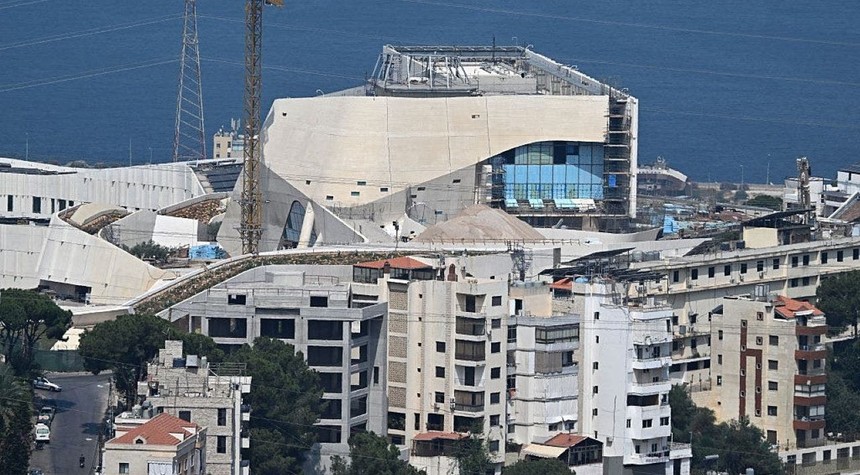
The United States State Department ordered the evacuation of non-emergency personnel from the American Embassy in Beirut on Monday, marking a significant escalation in diplomatic precautions as tensions mount across the Middle East.
The department’s announcement provided limited details regarding the specific threat assessment that prompted the withdrawal order. The decision affects non-essential government employees and eligible family members, though the embassy will continue operations with what officials describe as core staff.
This development arrives at a moment of heightened military activity in the region. President Donald Trump has authorized a substantial increase in American military forces throughout the Middle East while issuing pointed warnings directed at the Iranian government. The confluence of these events suggests American officials are preparing for potential instability across the broader region.
“The Department of State has ordered the departure of non-emergency U.S. government personnel and eligible family members from U.S. Embassy Beirut,” the State Department stated in its official announcement. The agency emphasized that this represents a prudent measure based on continuous security assessments rather than a complete closure of diplomatic operations.
The statement continued with assurances that essential embassy functions would persist despite the reduced presence. “The Embassy remains operational with core staff in place. This is a temporary measure intended to ensure the safety of our personnel while maintaining our ability to operate and assist U.S. citizens.”
Lebanon has long occupied a complex position in Middle Eastern geopolitics, sharing a border with Israel and hosting the Iranian-backed Hezbollah organization, which maintains significant political and military influence within the country. Any regional confrontation involving Iran would likely reverberate through Lebanon, potentially placing American diplomatic personnel at risk.
The timing of this evacuation order coincides with growing concerns about Iran’s nuclear program. Administration officials have indicated that Tehran may be approaching critical thresholds in its ability to produce weapons-grade nuclear material, though the State Department has not directly linked the Beirut evacuation to these specific concerns.
For American citizens currently in Lebanon, the embassy’s continued operation with essential staff means consular services remain available, though potentially at reduced capacity. The State Department’s characterization of this as a temporary measure suggests officials believe the heightened threat environment may be relatively short-lived, though no timeline has been provided for when full staffing might resume.
The American Embassy in Beirut has faced security challenges throughout its history. The compound operates from the Awkar area east of central Beirut, a location chosen with security considerations in mind following previous attacks on American diplomatic facilities in Lebanon during the 1980s.
As this situation develops, the evacuation serves as a tangible indicator of American concerns about regional stability. Whether these precautions prove to be an abundance of caution or a necessary response to genuine threats will become clearer in the days ahead.
Related: Mexican Forces Kill El Mencho as Cartel Violence Erupts in Multiple States