
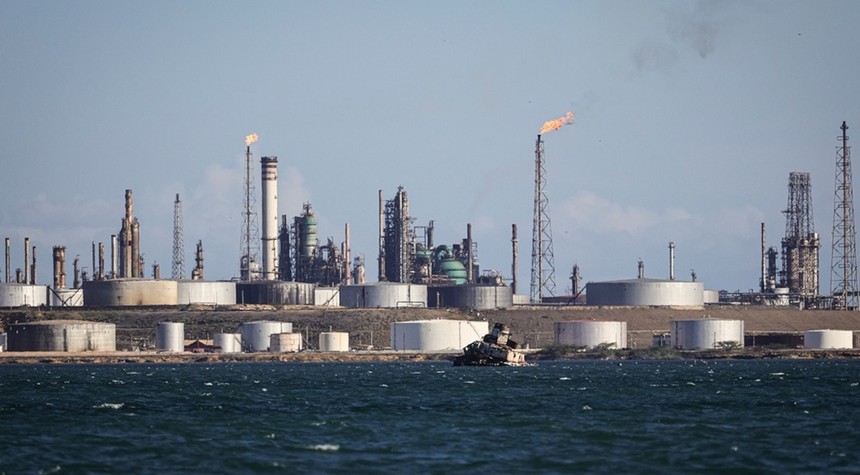
Venezuela has exported its first shipment of liquefied petroleum gas to the United States, marking a significant shift in relations between the two nations following last month’s American military operation that resulted in the capture of former President Nicolas Maduro.
The Singapore-flagged vessel Chrysopigi Lady departed from a port in northern Venezuela on the evening of February 1 and is scheduled to arrive in Providence, Rhode Island. Interim President Delcy Rodriguez, who assumed leadership after Maduro’s capture in January, announced the historic shipment through her official communications channels on Sunday.
“We are marking this historic milestone by exporting the country’s first molecule of gas; an achievement for the well-being of the people of Venezuela,” Rodriguez stated in her announcement.
The shipment represents the first tangible economic cooperation between Venezuela and the United States since President Donald Trump ordered the military operation that led to Maduro’s apprehension. The former Venezuelan leader now faces federal charges in American courts.
Rodriguez, who previously served as Maduro’s vice president, faces considerable challenges as she navigates her new role. The interim president must balance two complex objectives: maintaining domestic stability in Venezuela while managing diplomatic relations with Washington, whose military forces conducted operations on Venezuelan soil just weeks ago.
Recent public statements from Rodriguez reveal the delicate nature of her position. During a ceremony recognizing her as Venezuela’s Commander-in-Chief in Caracas on January 28, she acknowledged that her government has “opened a space for political dialogue” with the United States. However, she also issued a pointed warning, stating that “those who seek to perpetuate harm and aggression against the people of Venezuela should stay in Washington.”
The interim president has sought to frame the January 3 military operation in terms that preserve Venezuelan national pride while accepting the new political reality. She emphasized that “no one” in Venezuela surrendered during the operation, invoking what she termed “honor and glory to the heroes and heroines of January 3.”
These carefully calibrated remarks demonstrate the tightrope Rodriguez walks between satisfying American interests and maintaining her legitimacy among the Venezuelan people. Her government’s decision to proceed with energy exports to the United States suggests a pragmatic approach to rebuilding Venezuela’s economy and establishing working relations with Washington.
The liquefied petroleum gas shipment carries both economic and symbolic significance. For Venezuela, it represents an opportunity to revive its energy sector and generate much-needed revenue. For the United States, it signals a potential normalization of relations with a nation that has been adversarial for years under Maduro’s leadership.
The coming weeks will prove critical for Rodriguez’s interim government. Her ability to maintain order domestically while navigating the complex relationship with the United States will determine whether this energy shipment marks the beginning of a new era in Venezuelan-American relations or merely a temporary arrangement during a transitional period.
The international community watches closely as this South American nation attempts to chart a new course under leadership installed following unprecedented American military intervention.
Related: Rafah Border Crossing Reopens Under Israeli-Hamas Ceasefire Terms