
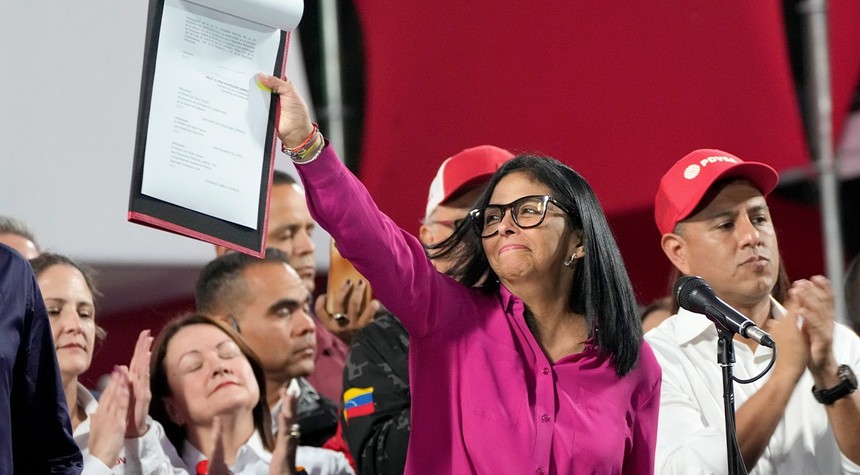
Venezuela has taken a dramatic step away from more than two decades of socialist economic policy. Acting President Delcy Rodriguez signed legislation this week that opens the nation’s oil sector to privatization and foreign investment, marking a fundamental shift in the country’s approach to its most valuable natural resource.
The policy reversal comes less than one month after United States forces captured former Venezuelan leader Nicolás Maduro, whose authoritarian rule had driven the once-prosperous nation into economic collapse. Rodriguez, who previously served as Maduro’s vice president, now faces the considerable task of rebuilding a country whose infrastructure and institutions have deteriorated under years of mismanagement and corruption.
The timing of this legislative action appears directly connected to pressure from the Trump administration, which has made clear its interest in Venezuela’s substantial oil reserves. Following Maduro’s capture, the administration moved swiftly to ease sanctions on the Venezuelan oil industry, creating an opening for American investment and influence in the region.
On January 10, President Trump convened a meeting at the White House with nearly two dozen executives from America’s leading oil and gas companies. During that gathering, the President outlined an ambitious vision for Venezuela’s energy future, stating that American firms would invest one hundred billion dollars to rebuild what he described as Venezuela’s “rotting” oil infrastructure. The goal, according to the administration, is to push Venezuelan oil production to record levels.
This represents a significant geopolitical development for the Western Hemisphere. Venezuela sits atop some of the world’s largest proven oil reserves, yet production has plummeted in recent years due to corruption, lack of investment, and the flight of technical expertise from the country. The United States has recently completed its first five hundred million dollar purchase of Venezuelan oil, signaling the beginning of what could become a substantial economic relationship between the two nations.
For American energy companies, Venezuela presents both opportunity and risk. The potential returns from revitalizing Venezuela’s oil sector are considerable, but the country’s political stability remains uncertain. Rodriguez’s tenure as acting president may prove temporary, and any future government could reverse course on privatization.
From a broader strategic perspective, increased American involvement in Venezuelan oil production serves multiple national interests. It provides an alternative source of petroleum that does not require dependence on Middle Eastern suppliers or other potentially hostile nations. It also extends American influence in South America at a time when China and Russia have been expanding their presence in the region.
The question now is whether Venezuela can successfully transition from a failed socialist state to a functioning market economy. Decades of price controls, nationalization, and economic mismanagement have left deep scars. The oil industry alone cannot solve all of Venezuela’s problems, which include widespread poverty, crumbling infrastructure, and weakened democratic institutions.
For the Venezuelan people, who have endured years of shortages, hyperinflation, and political repression, this policy shift offers a measure of hope. Whether that hope will be realized depends largely on how effectively foreign investment can be channeled into genuine economic development rather than enriching a new class of politically connected elites.
The world will be watching closely as this historic transformation unfolds.
Related: Britain Secures Visa-Free Travel Agreement With China for Short-Term Visits