
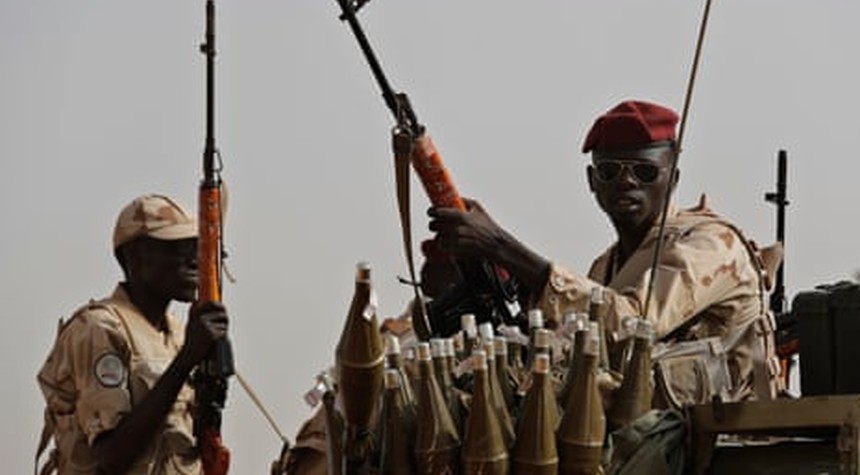
The United States Treasury Department announced sanctions Tuesday against four individuals and four companies accused of recruiting Colombian mercenaries to fight alongside Sudanese paramilitary forces that Washington has accused of committing genocide.
The sanctioned network, composed primarily of Colombian nationals and their associated businesses, has facilitated the deployment of hundreds of former Colombian military personnel to Sudan. These fighters have joined the Rapid Support Forces, a paramilitary organization responsible for war crimes including ethnically targeted massacres and mass abductions of civilians.
The scope of Colombian involvement in Sudan’s conflict first came to light last year when investigators documented more than 300 former soldiers contracted to fight in the African nation. The revelation prompted an extraordinary public apology from Colombia’s foreign ministry.
Colombian veterans have become among the world’s most sought-after mercenaries, a troubling distinction earned through decades of civil conflict in their homeland. Their extensive battlefield experience, familiarity with NATO equipment, and advanced combat training make them valuable assets in foreign conflicts where they have no legitimate stake.
In Sudan, these Colombian fighters have reportedly engaged in particularly disturbing activities. They have trained child soldiers, instructed militia members in drone operations, and participated directly in frontline combat operations. One mercenary acknowledged to investigators that he had trained children for combat during the siege of El Fasher, describing the experience as “awful and crazy” while attempting to rationalize it as simply “how war is.”
The sanctions target key figures in this mercenary pipeline. Álvaro Andrés Quijano Becerra, a dual Colombian-Italian citizen and retired Colombian military officer now based in the United Arab Emirates, stands accused of playing a central role in recruiting and deploying former Colombian soldiers to Sudan. His wife, Claudia Viviana Oliveros Forero, also faces sanctions.
The Treasury Department also sanctioned Mateo Andrés Duque Botero, a dual Colombian-Spanish citizen accused of managing businesses that handled funds and payroll for the network. According to Treasury statements, businesses associated with Duque and based in the United States conducted numerous wire transfers totaling millions of dollars during 2024 and 2025.
The fourth individual sanctioned was Colombian national Mónica Muñoz Ucros, whose company allegedly facilitated wire transfers connected to Duque and his business operations.
The Treasury Department’s statement included a direct appeal to international actors: “The United States again calls on external actors to cease providing financial and military support to the belligerents.”
Elizabeth Dickinson, senior analyst at the International Crisis Group, characterized the sanctions as a significant development in addressing the mercenary problem. She noted that targeting those who contract and coordinate mercenary forces represents an effective approach to disrupting these networks.
Colombia has recently taken steps to address its role as a mercenary source, passing legislation to ratify the International Convention Against the Recruitment and Use of Mercenaries. Whether such measures will effectively stem the flow of Colombian fighters to foreign conflicts remains to be seen.
The sanctions represent another chapter in America’s efforts to use economic pressure to influence behavior in distant conflicts where direct military intervention remains neither feasible nor desirable.
Related: United States Seizes Iranian-Linked Oil Tanker Off Venezuelan Coast