
The machinery of diplomacy appears to be gaining momentum in the effort to bring an end to the war in Ukraine, with President Volodymyr Zelenskyy announcing Thursday that documents aimed at establishing a ceasefire are approaching completion.
Speaking at the World Economic Forum in Davos, the Ukrainian president characterized his team’s engagement with President Trump’s negotiators as nearly constant, with discussions occurring “almost every day.” While acknowledging the complexity of crafting an agreement acceptable to both Kyiv and Moscow, Zelenskyy expressed measured optimism about the process.
“The documents aimed at ending this war are nearly, nearly ready,” Zelenskyy stated, offering the most concrete indication yet that substantive progress has been achieved in the negotiations.
The Ukrainian leader revealed that representatives from Ukraine, Russia, and the United States are scheduled to hold their first trilateral meeting in the United Arab Emirates, potentially beginning Friday and continuing through the weekend. He specified that these would be technical-level discussions, suggesting the participation of working-level officials rather than senior leadership.
Neither the White House nor Moscow has confirmed these trilateral arrangements. However, President Trump’s top envoys, Steve Witkoff and Jared Kushner, were expected to conduct separate meetings with Russian officials in Moscow on Thursday, indicating the administration’s active engagement on multiple fronts.
The question of security guarantees remains central to any eventual agreement. Zelenskyy made clear that Ukraine requires assurances backed by American military power, noting that while the United Kingdom and France have expressed willingness to commit forces on the ground, such arrangements cannot function without United States support.
“No security guarantees work without the U.S.,” Zelenskyy emphasized, underscoring the irreplaceable role of American involvement in any sustainable peace framework.
U.S. envoy Steve Witkoff, also speaking in Davos, suggested that negotiations have narrowed to a single remaining obstacle, though he declined to specify its nature. Zelenskyy acknowledged this assessment, describing the “last mile” of the road to peace as potentially “difficult.”
The Ukrainian president’s comments revealed the diplomatic complexity of the current moment. Separate negotiations between the United States and Ukraine, and between the United States and Russia, must eventually converge into unified talks. “Everybody has to be ready,” Zelenskyy stated, alluding to the delicate timing required for such a transition.
Regarding Russian President Vladimir Putin’s intentions, Zelenskyy maintained appropriate caution. “Nobody knows what is in his head,” he observed, while acknowledging that continued dialogue represents an improvement over silence, even as Russian attacks on Ukraine continue.
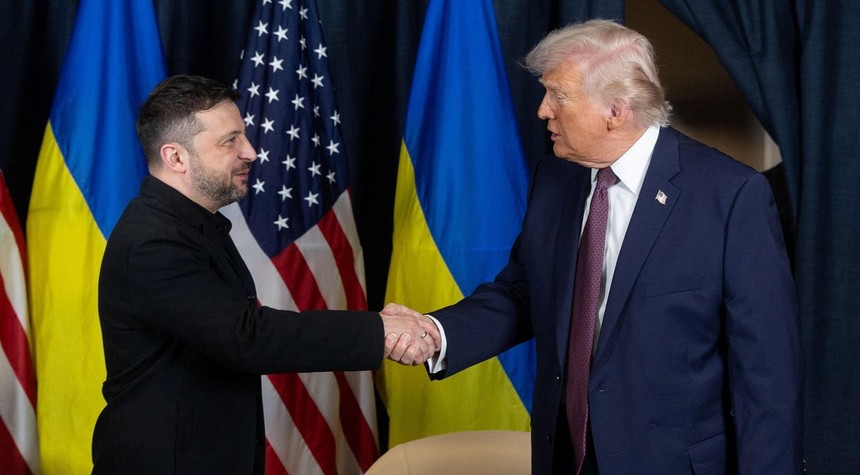
Zelenskyy described his Thursday meeting with President Trump as “productive and substantive,” noting discussions about air defense systems for Ukraine. The Ukrainian president expressed hope that this engagement would result in further strengthening of his country’s defensive capabilities.
The diplomatic activity in Davos and the planned trilateral talks represent the most significant movement toward a negotiated settlement since the conflict began. Whether these efforts will bear fruit remains uncertain, but the framework for serious negotiations appears to be taking shape.
For now, the world watches as American diplomacy attempts to broker an end to a conflict that has reshaped European security and tested the resolve of the Western alliance.
Related: Trump Establishes Board of Peace at Davos Summit with Focus on Gaza