
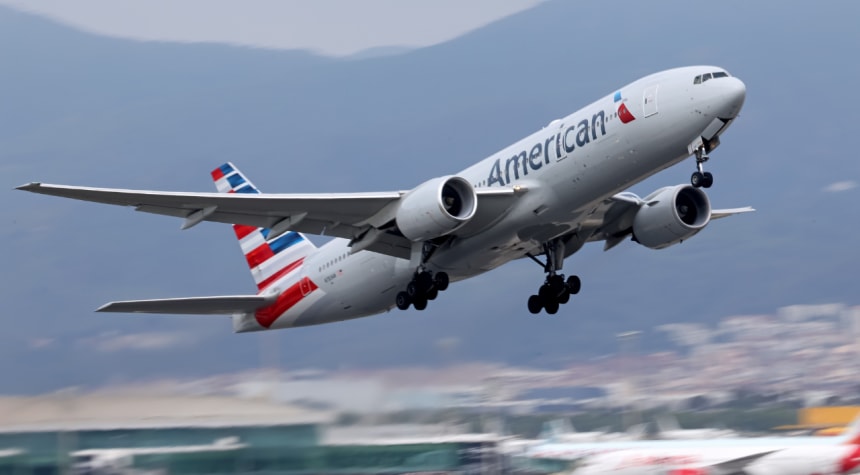
Two commercial passenger jets came within 400 feet of one another in a dangerous near-miss incident shortly after departing from Los Angeles International Airport in the early morning hours of November 7th. The Federal Aviation Administration has confirmed that an Air France aircraft made an unauthorized turn that brought it directly into the path of an American Airlines jet departing from a parallel runway.
The incident occurred at approximately 12:20 a.m. when Air France Flight 28 deviated from its assigned departure procedure without clearance from air traffic control. According to the FAA, the Air France crew made the turn that brought them into immediate conflict with American Airlines Flight 1660, which was departing simultaneously from an adjacent runway.
Audio recordings from air traffic control reveal the tense moments as controllers worked swiftly to avert a potential collision. "Air France 028 heavy, fly heading of 270 immediately," a controller can be heard directing the Air France crew in urgent tones. Within moments, the controller issued a traffic alert to the American Airlines flight, warning that another aircraft was directly ahead at a distance of less than one mile.
"Traffic alert, traffic 12 o’clock, less than a mile, maintain 2,000," the controller instructed. The American Airlines pilot responded promptly, acknowledging the instruction to maintain altitude at 2,000 feet.
Steven Arroyo, a retired airline captain and aviation expert based in Florida, described the severity of the situation. According to Arroyo, the Air France aircraft departed from the north side of Los Angeles Airport on a parallel runway from where the American Airlines aircraft had taken off. Without announcement or authorization, the Air France aircraft made a left-hand turn toward the American Airlines aircraft, bringing the two planes within 400 feet of each other and less than one mile apart. Such proximity represents a dangerously close encounter by any aviation safety standard.
Following the immediate crisis management, the controller questioned the Air France crew regarding the unauthorized turn. When asked which departure procedure the crew had been instructed to follow, the pilot requested a moment to verify. "Give me a minute," the pilot responded. The controller, maintaining professional composure despite the gravity of the situation, replied, "No problem."
The Air France crew subsequently confirmed they had been assigned the SUMMR TWO departure, a published standard departure procedure from Los Angeles International Airport. The controller then instructed the aircraft to resume its proper route.
The Federal Aviation Administration stated that air traffic control immediately issued corrective instructions after the Air France aircraft entered the flight path of the American Airlines jet. The swift action by controllers prevented what could have been a catastrophic collision.
While Arroyo emphasized the serious nature of this particular incident, he also noted that such aviation incidents remain exceptionally rare. The commercial aviation industry maintains stringent safety protocols and departure procedures specifically designed to prevent such conflicts.
The FAA has not yet announced whether any enforcement action will be taken regarding the unauthorized deviation from the assigned departure procedure. Both airlines were contacted for comment regarding the incident. As this investigation continues, it serves as a reminder of the critical importance of strict adherence to air traffic control instructions and the vigilance required to maintain aviation safety in our increasingly crowded skies.
Related: Florida Probes Socialist Organization’s Ties to Cuba and China