
President Donald Trump stated Thursday that United States military objectives in the ongoing campaign against Iran are “nearing completion,” as the conflict that began February 28th enters a critical phase with escalating regional violence.
The military operation commenced with coordinated American and Israeli strikes against Iranian military installations and government facilities. Among the casualties on the first day was Ayatollah Ali Khamenei, Iran’s supreme leader, who was killed during strikes on Tehran. His son, Mojtaba Khamenei, has since been selected to succeed him in leadership of the Islamic Republic.
The Iranian response has been substantial and widespread. Tehran has launched missile and drone attacks targeting Israeli territory, American military installations throughout the region, and multiple Gulf state nations. Iranian forces are also attempting to disrupt commercial shipping through the Strait of Hormuz, a critical waterway through which approximately one-fifth of the world’s petroleum passes.
The Israel Defense Forces reported Thursday that emergency personnel were responding to multiple projectile impacts in northern Israel. The attacks represent Iran’s continued effort to strike back against the nation it holds responsible for participating in the initial assault.
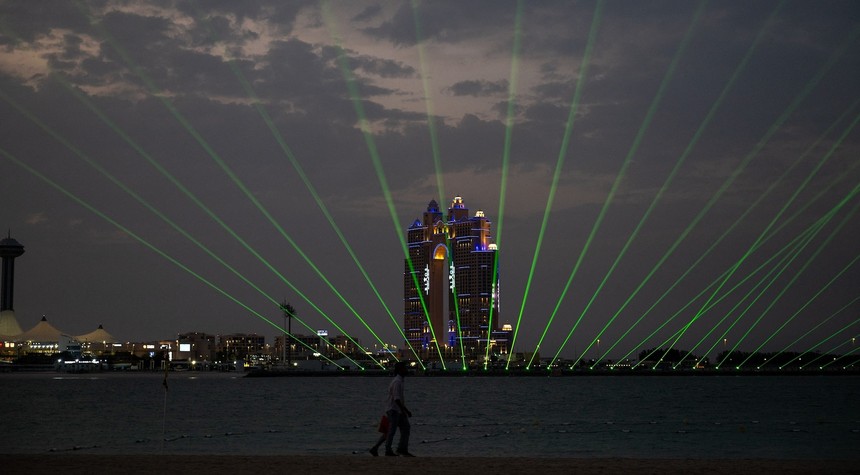
Both the United Arab Emirates and Saudi Arabia confirmed fresh Iranian attacks Thursday morning. The UAE Defense Ministry reported that its air defense systems were actively engaging incoming missiles and drones launched from Iranian territory. Saudi Arabia’s Defense Ministry announced the successful interception of at least five drones and one ballistic missile since midnight Wednesday.
The conflict has expanded Israel’s military operations beyond its engagement with Iran. Israeli forces are intensifying their campaign against Hezbollah, the Iran-backed militia operating in Lebanon, while simultaneously expanding ground operations in southern Lebanon.
In Baghdad, the United States Embassy issued an urgent security alert Thursday directing all American citizens to depart Iraq immediately. The warning cited credible intelligence suggesting that Iran-aligned Iraqi terrorist militias may conduct attacks in central Baghdad within the next 24 to 48 hours.
The embassy statement detailed a pattern of widespread attacks against American citizens and American-associated targets throughout Iraq, including the semi-autonomous Kurdistan region. “Terrorist militias have targeted Americans for kidnapping, and United States citizens should leave Iraq immediately,” the alert stated plainly.
The warning also noted that the Iraqi government has proven unable to prevent terrorist attacks occurring within its borders or launched from Iraqi territory, a sobering assessment of Baghdad’s capacity to protect foreign nationals amid the current crisis.
The regional conflagration represents the most significant direct military confrontation between the United States and Iran since the 1979 hostage crisis. The outcome will likely reshape Middle Eastern geopolitics for years to come, with implications for American strategic interests, energy markets, and the balance of power in a region that has known precious little stability in recent decades.
As this situation continues to develop, the safety of American personnel and citizens in the region remains the paramount concern for military planners and diplomatic officials alike.
Related: French Authorities Investigate Iranian Connection to Foiled Paris Bombing