
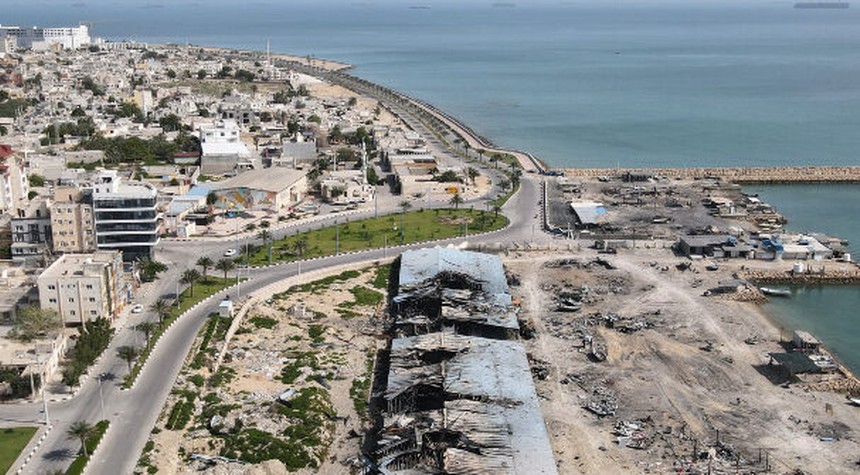
American military forces conducted strikes against Iranian military installations on Qeshm Island Monday following what United States officials characterized as Iranian attacks on American aircraft operating in the Strait of Hormuz. The action marks a significant escalation in tensions in one of the world’s most strategically vital waterways, even as both nations indicate that diplomatic efforts continue.
The strikes targeted military positions on Qeshm Island, a 576-square-mile landmass that has served as a strategic chokepoint in the Strait of Hormuz for centuries. Iranian state media reported five rapid explosions on the island Monday, with witnesses observing American warplanes overhead. Additional explosions were reported in Bandar Lengeh, a port city approximately 65 miles from Qeshm’s southwestern tip.
American officials described the military action as limited and defensive in nature, designed to protect both military assets and civilian shipping in the region. According to these officials, Iran fired surface-to-air missiles at American aircraft, prompting the swift retaliatory response that eliminated the missile launching positions.
The specific sequence of events remains disputed. One American official stated that Iran shot down an American drone and fired upon, but missed, two American fighter jets patrolling the strait. Iran’s Islamic Revolutionary Guard Corps claimed responsibility for bringing down two American drones using electronic warfare systems and asserted it had captured two additional drones the previous week. The United States military has rejected these Iranian claims entirely.
The strategic significance of Qeshm Island cannot be overstated. The Islamic Revolutionary Guard Corps maintains a major naval installation there, supporting both surface vessels and submarine operations. The island bristles with missile launchers connected by an extensive network of underground tunnels, complexes Iranian officials refer to as “missile cities.” Iranian military strategists have compared the fortified island to a stationary aircraft carrier, reflecting its importance to Tehran’s ability to project power throughout the Persian Gulf.
Iran also reportedly launched a missile from Qeshm Island at commercial vessels transiting the strait Monday, though American forces intercepted the weapon before it could reach its intended targets. This attempt to strike civilian shipping underscores the broader threat Iranian military forces pose to international commerce in waters through which roughly one-fifth of the world’s oil supply passes.
Administration officials speaking on background revealed that Monday’s strike was not an isolated incident. Several other targeted operations have been conducted against Iranian military positions in recent weeks, designed to degrade the Revolutionary Guard’s capability to threaten American forces and international shipping. Some of these strikes targeted cruise missile launchers.
Despite the military exchanges, both nations indicated that diplomatic channels remain open. Iranian Foreign Minister Abbas Araghchi told state media Monday that Iran is prepared for both military and diplomatic options “more than ever before,” adding that Iran has presented its conditions and formulated plan for negotiations.
The United States Central Command, which typically releases public statements regarding combat operations in the Strait of Hormuz, declined to comment on Monday’s action, maintaining operational security regarding the ongoing situation.
The question now facing policymakers in Washington and Tehran is whether these military exchanges will derail diplomatic efforts or serve to reinforce the urgency of reaching a negotiated settlement. The answer will determine whether this volatile region moves closer to stability or further conflict.
Related: United States and China Prepare for Economic Confrontation Under Fragile Ceasefire