
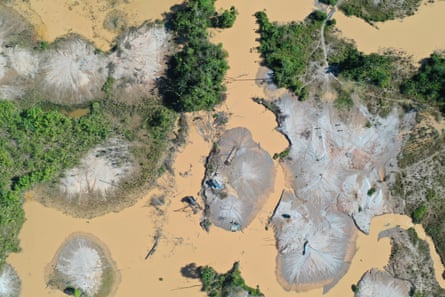
The Peruvian Amazon faces unprecedented destruction as armed criminal groups expand illegal gold mining operations across the region, capitalizing on record-high gold prices that recently surpassed $4,000 per ounce. New satellite imagery reveals the devastating scope of this environmental crisis, with approximately 140,000 hectares of pristine rainforest already lost to mining activities since 1984.
Recent aerial surveillance has documented a dramatic northward expansion of mining operations, marking a significant shift from historical patterns that were largely confined to the Madre de Dios region. The environmental devastation now stretches across multiple Peruvian provinces, transforming lush jungle landscapes into barren wastelands dotted with toxic pools.
The mining operations employ floating dredges that systematically destroy riverbeds while dispersing mercury, used to extract gold from sediment. This toxic process has contaminated at least 225 rivers and streams, creating a severe public health crisis for local communities. In the northern Loreto region, health studies indicate mercury levels in riverside populations at nearly four times the World Health Organization’s safety threshold.
Indigenous communities bear the brunt of this environmental assault. Roberto Tafur Shupingahua, speaking for affected riverside communities, reports armed confrontations with miners along the River Tigre. “Our communities are forced to defend themselves without government support,” he explains, highlighting the absence of effective state intervention.
The crisis has intensified with the deployment of 989 dredging operations in Loreto since 2017, including 275 new installations this year along the vital Nanay River, an essential Amazon tributary. These operations threaten both the ecosystem and the dozens of Indigenous communities that depend on these waterways for survival.
The environmental impact extends beyond deforestation. Mercury contamination in local fish populations has led to serious health concerns, including increased rates of birth defects and developmental disorders in affected communities. The toxic metal accumulates in the food chain, creating long-term health risks for populations that rely on river fish as a primary protein source.
As global economic uncertainties drive gold prices to historic highs, the incentive for illegal mining continues to grow. Without immediate intervention and enhanced enforcement measures, experts warn that the destruction could accelerate, potentially leading to irreversible damage to one of Earth’s most crucial ecosystems and the communities that call it home.
This environmental crisis represents not just a national challenge for Peru, but a global concern as the Amazon’s role in climate stability becomes increasingly critical. The situation demands immediate international attention and coordinated action to protect both the rainforest and its indigenous inhabitants from further devastation.