
American military forces achieved a significant milestone in naval warfare Wednesday when a United States submarine successfully sank an Iranian warship using a torpedo in the Indian Ocean, marking the first such engagement since the end of World War II.
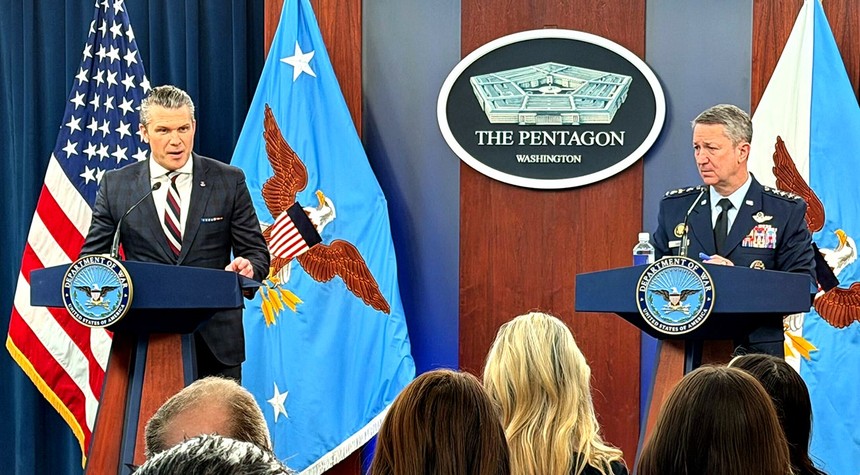
Secretary of War Pete Hegseth, appearing alongside Chairman of the Joint Chiefs of Staff General Dan Caine at the Pentagon, delivered the news to reporters during a briefing on Operation Epic Fury, the ongoing military campaign against Iranian targets.
“An American submarine sunk an Iranian warship that thought it was safe in international waters,” Hegseth stated. “Instead, it was sunk by a torpedo. Quiet death. The first sinking of an enemy ship by a torpedo since World War Two. Like in that war, back when we were still the War Department. We are fighting to win.”
The attack represents a notable evolution in modern naval combat, which has largely relied on air-delivered munitions and missile systems in recent decades. The last confirmed torpedo sinking of an enemy vessel occurred during the final months of World War II, when American submarines prowled the Pacific hunting Japanese shipping.
General Caine provided tactical details of the engagement, explaining that the Iranian vessel was “effectively neutralized” through what the Navy classified as a “fast attack” operation. The submarine crew employed a single Mark 48 torpedo to accomplish the mission.
“The U.S. Navy achieved immediate effect, sending the warship to the bottom of the sea,” Caine reported.
The Mark 48 torpedo has served as the primary submarine-launched weapon for the United States Navy since the 1970s, designed to engage both surface ships and submarines. The weapon system has undergone continuous upgrades over five decades but had not been used to sink an enemy vessel in combat until this week’s action.
The engagement occurred in international waters of the Indian Ocean, though specific coordinates were not disclosed during the briefing. The Iranian vessel’s mission and exact classification remain unclear, though Hegseth characterized it as a “prized” warship, suggesting significant value to Tehran’s naval operations.
This latest development in Operation Epic Fury demonstrates the expanding scope of American military operations against Iranian forces. The campaign has involved multiple service branches conducting coordinated strikes against Iranian military assets and infrastructure.
The historical parallel drawn by Secretary Hegseth to World War II submarine warfare carries particular significance. During that conflict, American submarines devastated Japanese merchant shipping and naval forces, contributing decisively to victory in the Pacific theater. The submarine force’s effectiveness earned it recognition as one of the most successful components of the American war effort, despite representing a small fraction of overall naval personnel.
The return to torpedo warfare after eight decades suggests a strategic calculation by American military planners to employ the full spectrum of available capabilities against Iranian forces. Submarine operations offer distinct advantages in stealth and surprise, as evidenced by the apparent inability of the Iranian vessel to detect or evade the attack.
As Operation Epic Fury continues, this engagement establishes a precedent that may reshape naval calculations throughout the region and beyond.
Related: Iran Faces Uncertain Future After Death of Supreme Leader Khamenei