
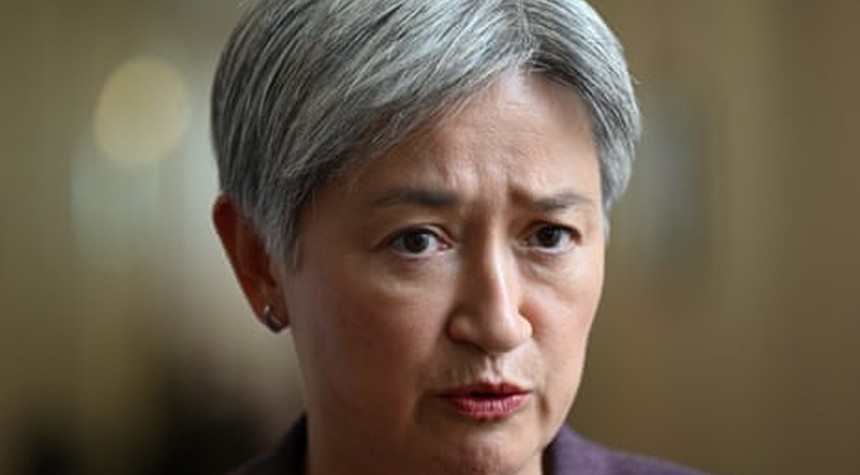
Australia has drawn a firm line against Chinese military provocations in the Pacific, with Foreign Minister Penny Wong preparing to deliver pointed criticism of Beijing’s recent nuclear-capable missile test and aggressive maritime conduct.
Speaking Thursday at the 59th Association of Southeast Asian Nations foreign minister’s meeting in the Philippines, Wong will address what she characterizes as a pattern of destabilizing behavior by the Chinese government. The remarks represent a significant diplomatic challenge to Beijing at a time when regional tensions continue to escalate.
The immediate catalyst for Wong’s address was China’s test launch of a nuclear-capable submarine-launched missile in the South China Sea earlier in July. According to the foreign minister’s prepared remarks, the test “came with too little information and notification” and occurred within the broader context of China’s rapid military expansion, particularly its nuclear arsenal development, without adequate transparency or reassurance to neighboring nations.
Australia has formally described the missile test as provocative and destabilizing. The test occurred mere hours after Australia signed a defense agreement with Fiji, suggesting a calculated response from Beijing to Western military cooperation in the Pacific.
Prime Minister Anthony Albanese expressed concern about the missile’s long-range capabilities and the considerable damage such weaponry could inflict if deployed operationally. The international community has widely condemned the test, viewing it as another step in China’s assertive posture throughout the Indo-Pacific region.
Wong’s speech will also address recent maritime incidents involving Chinese vessels. The Philippine military accused the China Coast Guard of assaulting a Filipino sailor with a baton Monday on a disputed shoal in the South China Sea. Wong characterized this conduct as destabilizing and dangerous, signaling Australia’s intention to continue registering concerns about Chinese vessels engaging in aggressive behavior toward Philippine, Vietnamese, Malaysian, and Indonesian maritime forces.
The foreign minister met with her Chinese counterpart, Wang Yi, on the sidelines of the ASEAN conference Tuesday evening, marking their twelfth meeting. These diplomatic encounters have become increasingly important as tensions between the two nations persist despite efforts to maintain working relationships.
Beyond the immediate Pacific concerns, Wong will address the escalating crisis in the Middle East, particularly the threat of weaponizing the Strait of Hormuz. Both Iran and the United States have threatened to impose restrictions on this critical waterway, which would have severe consequences for global energy markets and regional stability.
Heavy strikes have resumed between the warring nations, with the United States launching consecutive rounds of attacks on Iran while Tehran has struck Washington’s Gulf allies. Iran’s president declared the country is in a “full-scale war” as the United States expanded its aerial campaign. The Iran-allied Houthi forces in Yemen have announced a blockade of Saudi ports, further complicating the regional security situation.
The renewed fighting has already produced tangible economic consequences. International Brent crude prices have surged twenty-three percent over the past two weeks, approaching ninety dollars per barrel. Domestically, fuel prices have increased forty cents in three weeks amid dwindling global oil reserves.
Wong will caution that the region cannot afford to have the Strait of Hormuz weaponized, emphasizing the need for both the United States and Iran to maintain a ceasefire. The strait represents a critical chokepoint for global energy supplies, and any sustained closure would have catastrophic economic implications worldwide.
These dual challenges in the Pacific and Middle East underscore the complex security environment facing Australia and its regional partners, requiring careful diplomatic navigation between competing powers and interests.
Related: Knife Attack Injures Two Americans at Greek Archaeological Site